All posts by David Lublin

NARAL Pro-Choice’s Unique Endorsement Strategy

NARAL_logoNARAL Pro-Choice Maryland’s PAC is following an endorsement strategy this year that bears comment even leaving aside the controversy over its endorsements raised earlier today here in the exchange between District 18 Candidate Natali Fani-Gonzalez and NARAL Pro-Choice Maryland’s PAC.

Most interest groups endorse up to as many candidates as there are seats to be filled. Occasionally, groups will endorse more candidates that there are seats available. For example, the League of Conservation Voters endorsed four candidates for the three House of Delegate seats in District 18.

NARAL Pro-Choice Maryland’s PAC has taken a unique two-tier approach. The PAC endorses up to as many candidates as there are seats up for election. At the same time, they all give a “100% Pro-Choice” rating to other eligible candidates that do no receive the endorsement.

Like the endorsement, candidates are free to tout this 100% Pro-Choice rating in the literature and other communications. I already received a blast email from Jordan Cooper proudly touting his rating in strongly pro-choice District 16.

Is the PAC devaluing NARAL Pro-Choice Maryland’s endorsement? After all, voters are unlikely to distinguish easily between the endorsement and the 100% Pro-Choice rating. Candidates are less likely to sweat their endorsement process since the consolation prize is such a good one.

While this strategy encourages all candidates to take strong pro-choice positions even if they are unlikely to receive the PAC’s official endorsement, it somewhat weakens the incentive for incumbents to cultivate their support during the legislative session that makes policy.

I suppose it also makes the endorsement process a bit easier as the decision makers know that good candidates who don’t get the endorsement won’t walk away empty handed. We’ll see how it goes and if other organizations follow NARAL Pro-Choice Maryland PAC’s lead.

Share

NARAL Pro-Choice MD Responds

NARAL_logoNARAL Pro-Choice Maryland PAC sent me the following statement in response to the earlier post on Seventh State regarding their endorsements in District 18:

The NPCM PAC recently made a clerical error that had a large and unfortunate impact. We understand the magnitude of our error and apologize for the confusion it has caused. We have reached out to each of the candidates, including Ms. Natali Fani-Gonzalez. The NARAL PAC board endorsed the incumbent candidates from District 18. We mistakenly issued an endorsement to a fourth candidate who was intended to receive a 100% Pro-Choice rating, which is used for candidates who do not receive an endorsement but reflects their Pro-Choice values.

I would have been very surprised if the PAC had not endorsed the incumbents, as they all are very supportive of reproductive freedom and I am not aware of any actions they have taken that would cause disgruntlement from NARAL Pro-Choice Maryland.

When I received, Natali Fani-Gonzalez’s communication, I thought perhaps their PAC had intended to endorse her either as a fourth candidate or in place of one of the incumbents because they thought she would be an exceptionally strong leader on the issue.

You can read Natali Fani-Gonzalez’s thoughts on the matter as well as the PAC’s response above and draw your own conclusions.


Share

Moms Demand Action

Editor’s Note: Aimee Olivo of Cheverly wrote this guest post on Moms Demand Action for Gun Sense in America. Good news: you don’t have to be a Mom to support this terrific organization.

How does a trickle become a stream? A cry become a rally? A mom become a movement?

When enough gather with one voice to demand action.

And that’s what’s happening in Maryland and across the nation through Moms Demand Action for Gun Sense in America.

I’m so grateful to be part of this group working to save lives across our country and invite you to join us.

Like so many others, I was devastated by Newtown. I was outraged by Trayvon Martin. But if I’m honest with myself, I was content to simply be, as my friend Jennifer says, a “clicktivist” on common sense gun reform. I shared my outrage and devastation about those events and so many others that happen every day across our country via Facebook links, likes and comments. I cheered when the Maryland General Assembly passed the Maryland Firearm Safety Act of 2013, but I didn’t really do anything more.

But at my first Maryland Moms Demand Action event, I learned that there are a lot of moms and dads and folks who aren’t parents who care deeply enough about this issue to invest a great deal of time and effort in it.

And that is pretty inspiring.

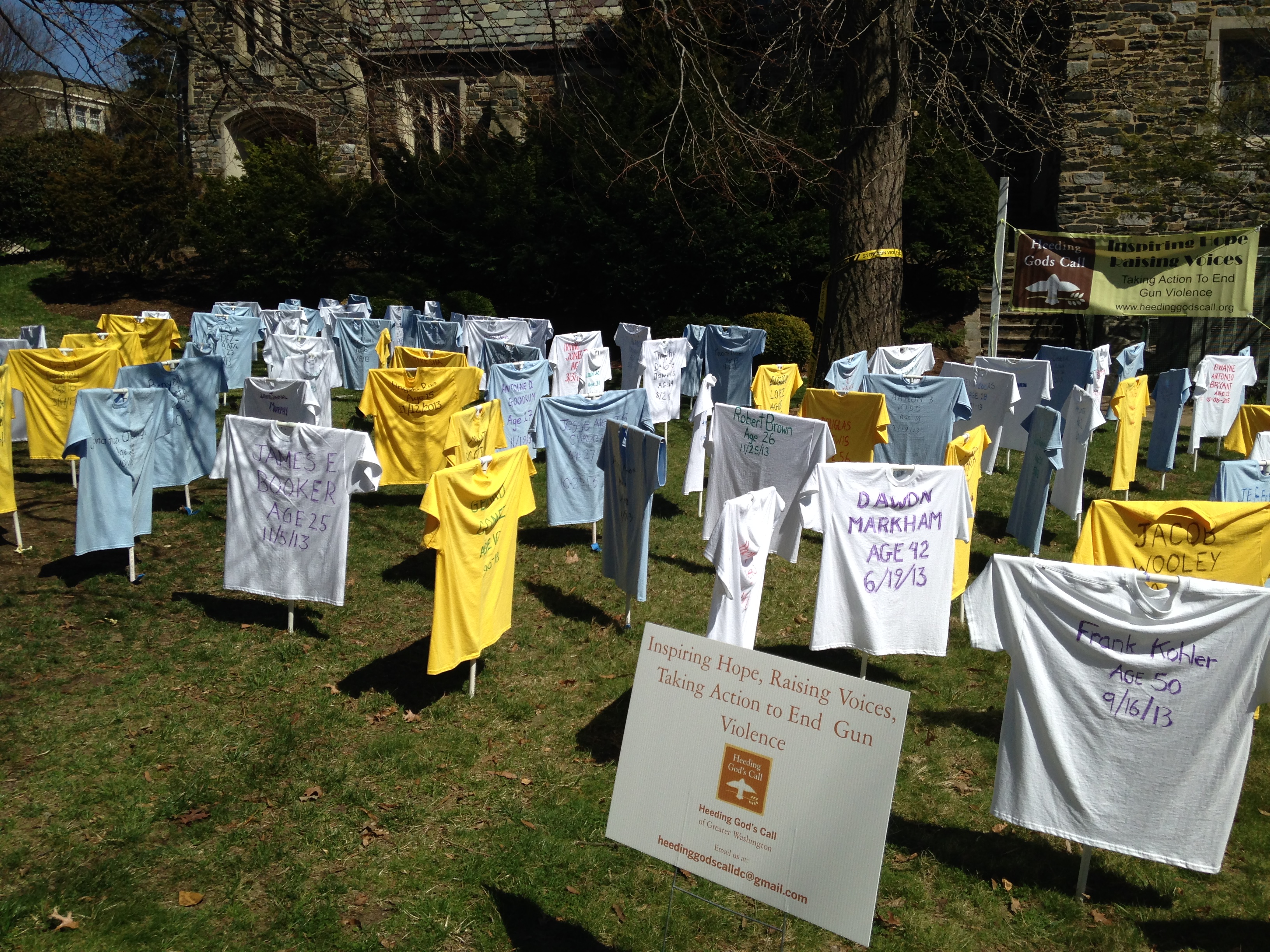
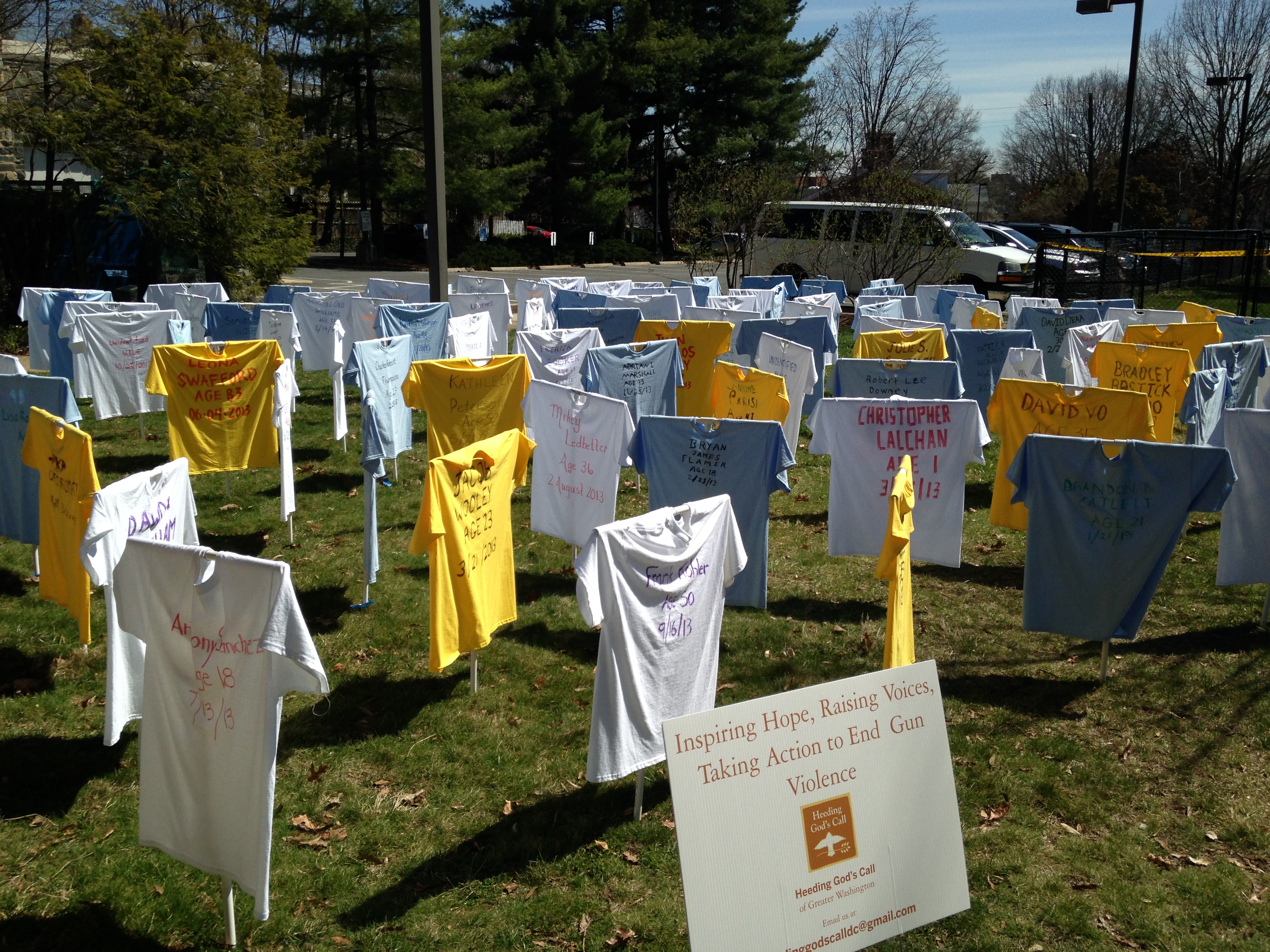
Since its founding as a simple Facebook page the day after Newtown, Moms Demand Action has become a powerful, nonpartisan grassroots movement with a chapter in every state across the country. Recently joining forces with Mayors Against Illegal Guns, this group is now the largest gun violence prevention organization in the country with more than 1.5 million grassroots supporters.

The goals really are, in my opinion, common sense solutions that support the 2nd Amendment and sensible laws that will protect our families and communities. This movement of mothers will no longer be silent as Congress, companies and colleges turn their back on sensible gun laws and policies. We are organizing to effectively lobby and apply pressure that will result in stronger, sensible gun laws and policies that will protect our children and families. As we grow, the message becomes even louder and more clear.

Maryland members of Moms Demand Action were instrumental in pushing the General Assembly to pass the Firearm Safety Act. But, the fight is far from over. The gun lobby is hard at work trying to erase these common sense reforms. (Just take a look at this questionnaire.)

So visit the site: Moms Demand Action for Gun Sense in America. “Like” the Moms Demand Action – MD Facebook page. Make a donation to support this important work. Come to a local event. And then talk to your friends and encourage them to do the same.

Because it’s time for gun sense in America.

Aimee lives in Cheverly, MD, with her husband and two sons.

Share

D18 NARAL Endorsement Controversy

NARAL_logo
Natali Fani-Gonzalez, one of the challengers to the three incumbent delegates in District 18, was naturally thrilled to receive the following email from Maida Schifter’s email account with NARAL Pro-Choice Maryland on April 4th:

Dear Natali,

I would like to congratulate you on earning NARAL Pro-Choice Maryland’s PAC endorsement.  We are excited about your candidacy and look forward to working with you as we advance the agenda for reproductive rights in Maryland.

We will be issuing a press release and posting to social media about our endorsement on or about April 14 and at that time will also make available an NCPM ENDORSED logo for your use.  Our staff will be happy to answer any questions you or your campaign may have.

Thank you for your service.

Warmest regards,
Edward Terry
PAC Chair

Endorsements like these serve a number of valuable purposes. In strongly pro-choice districts like D18, it serves as an excellent imprimatur that the candidate is “right” on a set of issues important to voters. They are especially valuable for challengers as they further attest to the seriousness and often viability of a campaign–great for helping to attract additional support.

However, it apparently was not meant to be. NARAL Pro-Choice Maryland PAC Chair Edward Terry called to say that the letter had been mistakenly sent out by an intern. Here is Natali Fani-Gonzalez’s email response to that phone call which she sent yesterday on April 9th:

Hi Maida –
I have just received a phone call (8:24 pm) from your NARAL Pro-Choice Maryland PAC Chair Edward Terry.  He stated that you are an intern at NARAL Pro-Choice and that you mistakenly sent me an endorsement letter five days ago (your email below) on behalf of your organization. Moreover, I received a phone call from NARAL a few days before your endorsement announcement to further inquire about my answer with regards to the taboo of reproductive-rights within the Latino community. During the call, I was also informed that my answers to the questionnaire were great.Excited about the news, I announced your endorsement via Twitter and received lots of great feedback.However, Mr. Terry’s story is flawed:

2. I know that incumbents in D18 were disconcerted with the endorsement.
3. I know that a “serious organization” such as NARAL will never allow interns to distribute sensitive information such as political endorsements.

Over the past decade, I have been part of numerous Boards, including Goucher College, Emerge Maryland, the Maryland Latino Coalition for Justice, to name a few.Therefore, I would appreciate if you do not insult my intelligence with such frivolous rationalization.
The true story: you decided to take back my endorsement under external forces’ pressure.

Respectfully,
Natali Fani-Gonzalez

Share

Voting Rights and Redistricting

Many people know that the Voting Rights Act can require the creation of majority-minority districts to protect minority representation. But the actual demands of the Act are often misunderstood.

The Supreme Court outlined the basics of when states must create districts designed to advance minority opportunity in a 1986 case called Thornburg v. Gingles. The case outlined a three-prong test that plaintiffs must meet in order to win a case arguing for the creation of a new majority-minority district.

Specifically, the minority group must prove that (1) it is sufficiently large and geographically compact to constitute a majority in a single-member district; (2) it is politically cohesive; and (3) racial-bloc voting usually defeats the minority’s preferred candidate.

I think of the first prong as the “is there a solution?” prong. Courts generally are not in the business of taking cases where they cannot offer relief. So if it is not possible to create a geographically compact single-member district with a group majority, don’t bother.

Of course, this still leaves room open for interpretation. For example, how compact must a district be to be deemed “geographically compact?” In more recent cases, courts have inveighed against minority districts with bizarre boundaries drawn for racial reasons–even as the Court has deemed it acceptable to gerrymander for partisan reasons.

This prong is one reason why there has been little litigation to create Asian-American majority districts. It’s just not possible to draw these districts  in most areas of the country just as it would likely be very difficult at best to create one anywhere in Maryland.

The second prong requires that the minority group tends to vote together. Obviously, 100% cohesion never actually occurs and is not needed to meet this requirement. Moreover, the level of cohesion can still vary across races.

But the basic idea is that you cannot draw a district designed to protect the interests of minority if the minority is not cohesive. For example, how would one advantage the interests of a group that splits its votes evenly between Democrats and Republicans?

The third prong is often the most critical. If the first prong focuses on the potential for a solution, this prong assesses whether there is a problem. Voting must be racially polarized–that is, the minority and majority groups must regularly, though not always, support different candidates.

Moreover, racial-bloc voting must be sufficiently great to defeat the minority’s preferred candidate. After all, if a black candidate in a 40% black district receives 85% of the black vote and 35% of the white vote, the black candidate will still win with 55%.

If the minority candidate can win without drawing a district with a majority of group members, the Court did not really see a problem. Why should courts intervene to aid minority candidates if they have a good shot even without their help?

So the racial-bloc voting has to be sufficient to defeat the minority’s preferred candidate. For example, in the same district, if the black candidates rarely received more than 10% of the white vote, they would usually lose and meet the requirement.

In cases in which minorities can win with reasonable frequency even if they do not constitute a majority, courts are more reluctant to create districts. Del. Ana Sol Gutiérrez has argued for creating a subdistrict in District 18 to elect a Latino candidate. But her repeated election from a district without a Latino majority would provide evidence for the other side in a court case.

Note that I refer to the minority’s preferred candidate. The point is the candidate preferred by the minority group regardless of the race of the candidate. So white candidates who receive a majority of the black vote running against a black candidate are still minority-preferred candidates–or candidates of choice in the argot. Still, results from elections with candidates of the same race as the group at issue are considered especially valuable in assessing racial polarization in voting rights cases.

One also has to be careful not to lump minority groups together willy-nilly. Courts do not just combine African Americans, Latinos, and Asian Americans into a single category. On the contrary, one would need to prove that such groups consistently vote together to  begin to make such a case. And they often don’t.

If you’d like to know more, you can buy a copy of my book, The Paradox of Representation: Racial Gerrymandering and Minority Interests in Congress, (the perfect Easter or Passover gift) or look online at Google Scholar or Research Gate for my articles in various political science and law journals.


 

Share

Don’t Pick Up the Phone

The General Assembly is out of session. There are now around ten weeks between now and the primary. So it’s that dangerous time when the thoughts of legislative candidates turn to their campaign accounts. And how they wish there was more in them.

Whatever you do, don’t pick up the phone unless you want to open your wallet, volunteer to give time, or just feel like having a nice chat with a stranger. No amount is too small. Don’t have $100. How about $50. Or even $25 so we can broaden our contribution base? Even $10 can help.

If you’re really wealthy, you can’t even use the excuse of having maxed out anymore because the Supreme Court did away with the limits on the total amount anyone can donate with the McCutcheon decision, though the limits on the amount you can donate to a single candidate remain in place.

Lobbyists really hate the McCutcheon decision as they know they’ll be dunned more than ever. While the wealthy can at least just say no, it’s harder for lobbyists who know that they may well be knocking on these same people’s door and at least want a hearing.

Of course, the not so big secret of campaign finance is that most candidates hate asking for money even more than other people hate giving it. They didn’t seek office to become fundraisers. Oh sure, some are good at it and thrive on it. But most would rather do just about anything else.

Share

Duchy Fundraiser Attacks Sierra Club

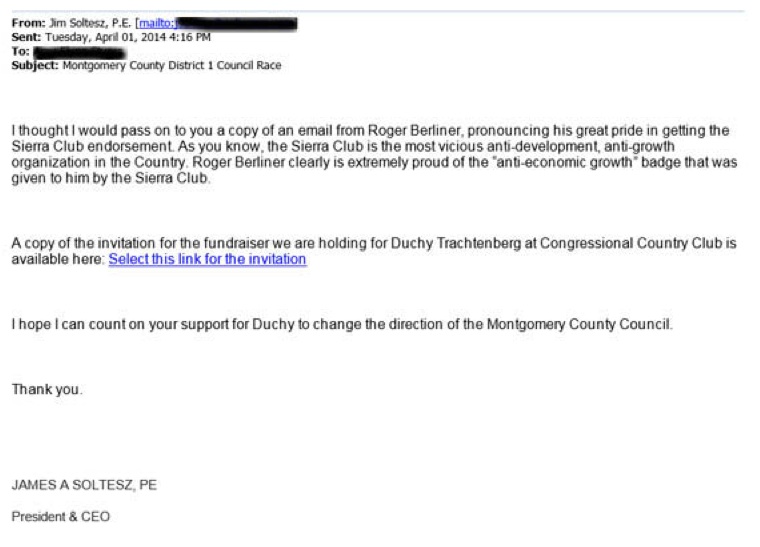
Developer Jim Soltesz is decrying Roger Berliner’s embrace of the “vicious” Sierra Club’s endorsement as part of his effort to raise money for Duchy Trachtenberg. (h/t Washington Post). The email is practically an ad for Roger Berliner. Truly unhelpful in this very pro-environment district.

Duchy needs to repudiate this email and cancel this fundraiser if she wants to salvage the situation. I look forward to hearing her response to this attack.

Soltesz

Share

Good News for Sexual Assault Survivors

From Del. Ariana Kelly:

This weekend the Maryland Senate passed my legislation (HB 963) to establish process for treating sexual assault survivors in EVERY hospital in Maryland.

What’s that you say, every hospital in Maryland doesn’t currently treat victims of sexual assault?

That’s true! This is an issue I’ve been working on since my days as Executive Director at NARAL Pro Choice Maryland. Only one hospital in every county is designated to provide forensic medical exams for sexual assault survivors.

In Montgomery County, under the current law only Shady Grove Hospital is fully equipped to handle victims of sexual assault. If you are raped and show up at Holy Cross, Suburban, Montgomery General, or Washington Adventist Hospital, you may not be able to get access to a sexual assault forensic exam. These exams are vital pieces of evidence if victims wish to pursue charges against their assailant and without these exams, rapists are allowed to walk free.

Showing up in the Emergency Room at these other hospitals, you might be told to get back in your car and drive yourself to Shady Grove Hospital. Or in instances of trauma, you could be taken to Suburban Hospital and then transferred to Shady Grove, all the while being advised not to bathe or use the bathroom so as to not tamper with the evidence from the rape.

Thanks to this legislation which passed both houses unanimously every hospital will now have to establish a protocol for treating victims of sexual assault.

Share