All posts by Adam Pagnucco

Is the Liquor Monopoly Improving?

By Adam Pagnucco.

Once again, Montgomery County’s liquor monopoly is a hot issue in local politics.  As far as we know, MoCo is the only county in the nation in which the county government has a monopoly on the distribution of beer, wine and spirits and also a monopoly on retail sales of spirits.  Candidates for office disagree on whether it is needed.  In a response to David Lublin’s recent post on the subject, Department of Liquor Control (DLC) Director Bob Dorfman claims it has improved.

Has it?

We will give the monopoly credit for one thing: it did not see system-wide distribution failures in the critical week between Christmas and New Year’s last year as it did in 2015 and 2016.  That has not stopped two anti-monopoly groups from forming in the last few months, one representing licensees and another representing consumers.  But what’s really going on?  Let’s look at the data.

According to Gallup and the U.S. Department of Health and Human Services, alcohol consumption tends to be correlated with education and income.  That makes sense – people with college and graduate degrees tend to make more money, and people with more disposable income have more money available for alcohol purchases.  MoCo has lots of highly educated and wealthy people so we should be one of the leaders in alcohol spending in Maryland.

The Comptroller of Maryland, who collects alcohol taxes, posts annual reports of alcohol sales per capita for each of Maryland’s twenty-four jurisdictions on his website.  We collected the last ten fiscal years of that data and present it below.  Let’s remember when recent changes at the DLC occurred.  After many revelations of bad performance in 2014, DLC launched an “Action Plan” to improve performance in June 2015.  George Griffin, the former DLC Director who was blamed for the first New Year’s Eve meltdown, left in January 2016, about halfway through Fiscal Year 2016 (which ended on June 30).  Bob Dorfman, the new DLC Director, started in December 2016, about halfway through Fiscal Year 2017.  If these events were associated with genuine operational improvements, we would expect to see significant increases in both per capita sales and rank among jurisdictions over the last three years.

That has not happened.

Below is data on per capita sales of spirits, wine and beer in Montgomery County over the last ten fiscal years.
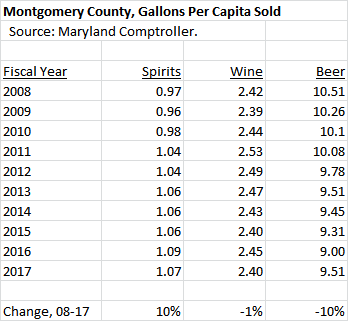
Spirits sales per capita have increased over the last decade, although they have barely changed since 2013.  Wine is stagnant.  Both wine and spirits fell in FY17, the first year of the new Director.  Beer sales per capita are down over the last decade and rose slightly in FY17.  But here’s the thing: MoCo’s new craft breweries are exempted from the liquor monopoly and, as a result, are doing really well.  The tiny gain in beer could be due to FREEDOM from the monopoly, not better operations at the monopoly.

Now let’s compare MoCo’s rank in per capita sales to the 23 other local jurisdictions in Maryland.
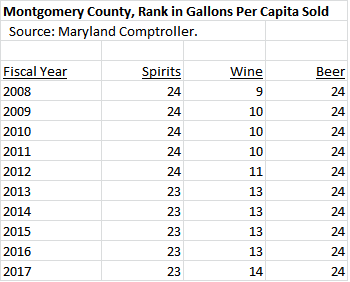
Because of its education and wealth, MoCo should be one of the leading counties in per capita alcohol sales.  It’s not.  In terms of spirits, the only county that’s worse is Somerset, which perhaps not coincidentally has its own monopoly on spirits sales.  In terms of beer, MoCo is dead last.  In terms of wine, MoCo has slid from ninth in the state to fourteenth, moving down a spot in FY17.  Jurisdictions in which residents bought more wine per capita than MoCo in FY17 included Anne Arundel, Baltimore City, Baltimore County, Calvert, Carroll, Cecil, Frederick, Garrett, Harford, Howard, Kent, Talbot and Worcester.  Does anyone believe that residents of counties with two-thirds of MoCo’s household income (or less) drink more wine than we do?

What’s happening is that consumers leave the county to buy alcohol.  That’s why numerous D.C. liquor stores are located within blocks of the MoCo border.  That’s why a fifth to a quarter of customers at Total Wine stores in McLean and Laurel come from MoCo.  The state’s Bureau of Revenue Estimates found that if MoCo customers were to return to the county to shop for alcohol in the absence of the liquor monopoly, the county would see a surge of almost $200 million in new economic activity, enabling a path forward for the county to replace every cent of lost revenue.

Dorfman is a better manager than his predecessor and we believe he is genuinely trying to improve DLC.  But Dorfman won’t be there forever and DLC has a long history of problems.  The monopoly also has a long history of promising improvement, mostly resulting in fleeting or ineffective fixes with quick relapses.  Even modest liberalization passed by the General Assembly to allow some private retail sales of spirits has been blocked.  What the above data on per capita alcohol sales shows is that, despite claims to the contrary, not much has changed.  And unless MoCo starts behaving like a normal county and allows private sector competition, true change may never come.

Share

Brooks and Wilhelm Take on Amazon

By Adam Pagnucco.

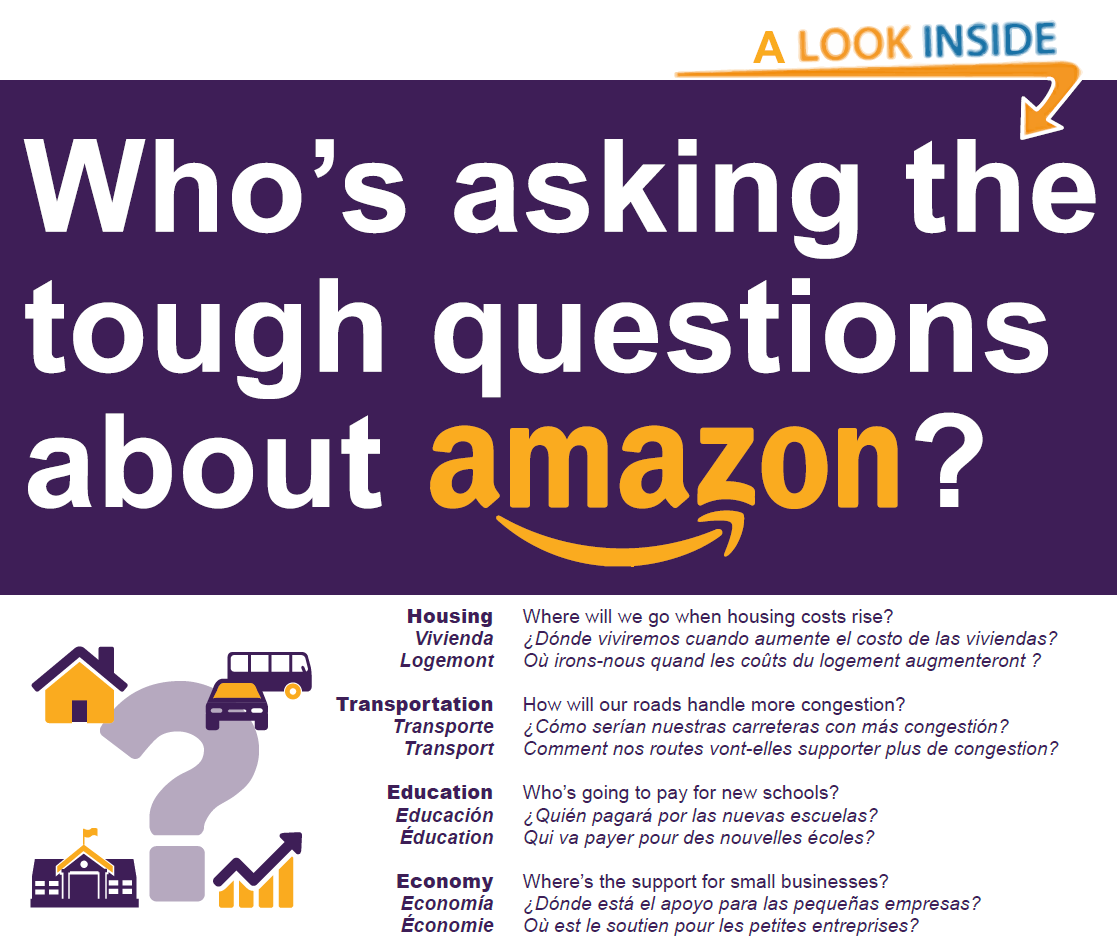
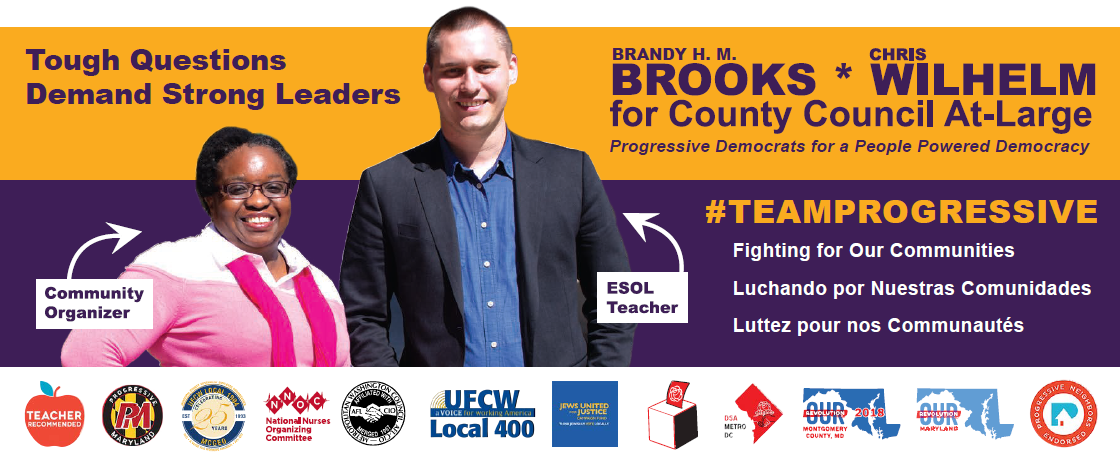
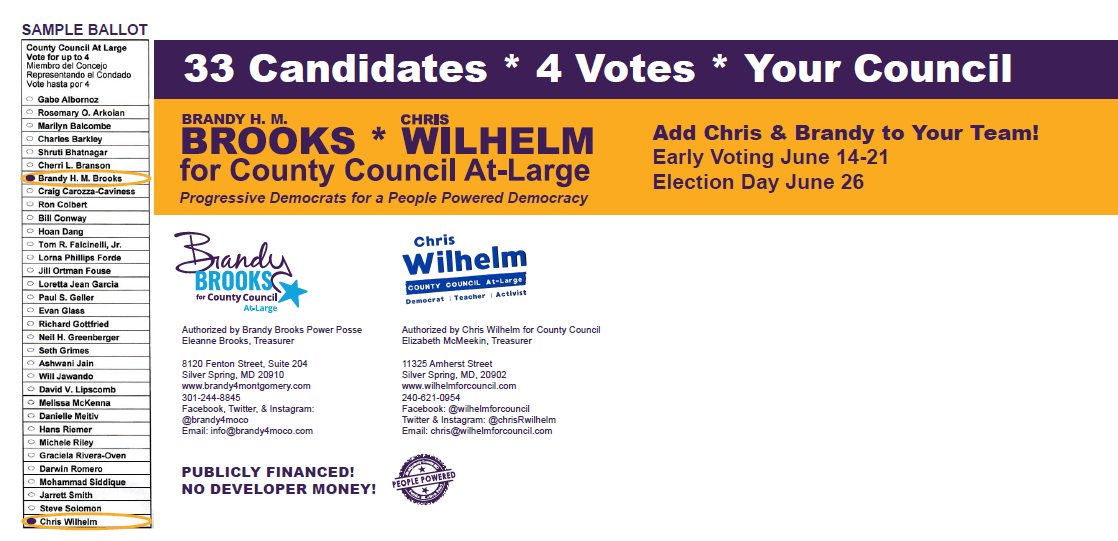
Council At-Large candidates Brandy Brooks and Chris Wilhelm, who are running as a team, have sent out the mailer below raising concerns about the impact of Amazon possibly establishing a second headquarters in Montgomery County.  Put aside whatever feelings you have about the underlying issue; we find this to be a smart political tactic.  There are so many candidates in the at-large race this year that the victory threshold could be as low as 30,000 votes – or less.  If that number of voters, which corresponds to roughly thirty percent of the likely Democratic primary electorate, is concerned about Amazon, and if Brooks and Wilhelm are the only candidates in the race with that message, they could get a leg up.  We reprint their mailer – a 15″ by 12″ monster – below.

Share

Labor Pumps Money Into Anti-Blair Super PAC

By Adam Pagnucco.

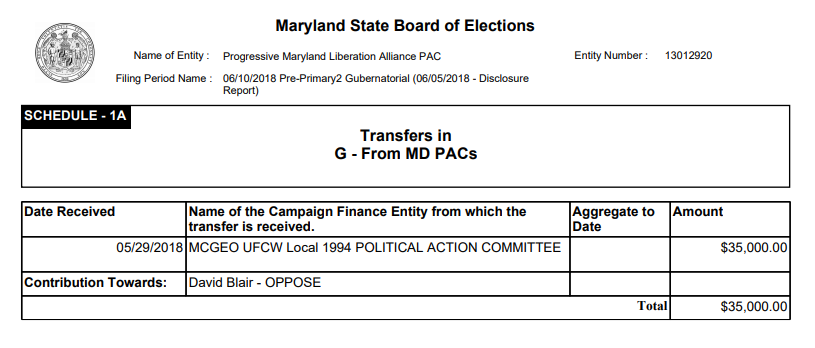
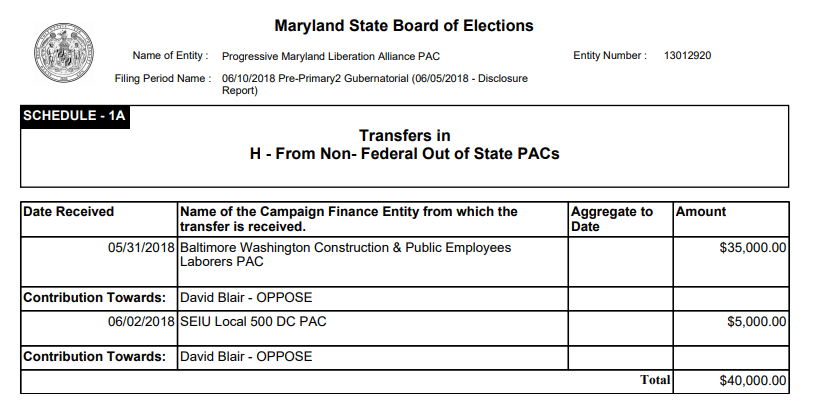
Four labor unions and an immigrant advocacy organization have contributed a combined $90,000 to a Super PAC which opposes the election of David Blair as Montgomery County Executive.

The Progressive Maryland Liberation Alliance PAC is a Super PAC affiliated with Progressive Maryland.  The Super PAC’s Chair, Larry Stafford, is Progressive Maryland’s Executive Director.  The group has previously distributed anti-Blair flyers but now has the money to do a lot more than that.

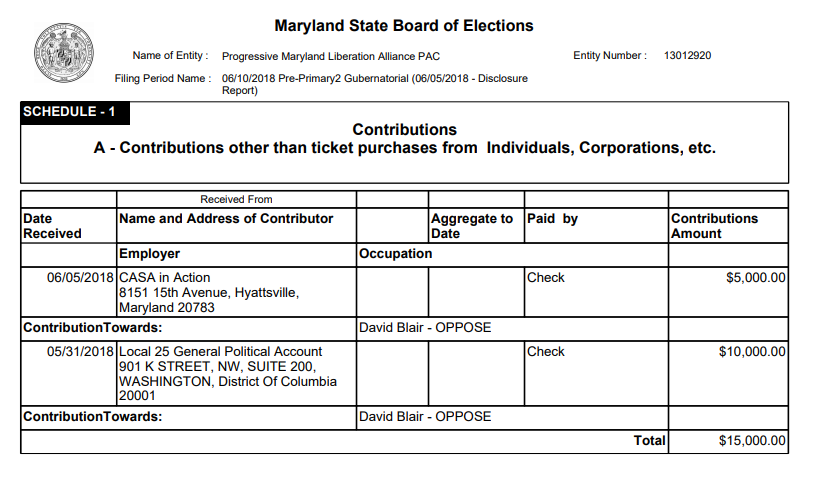
The Super PAC’s campaign finance filings indicate that it was organized for the purpose of supporting gubernatorial candidate Ben Jealous, State Senate candidates Jill Carter, Antonio Hayes and Mary Washington, State’s Attorney candidate Victor Ramirez and Delegate candidate Melissa Wells and opposing State Senator Bobby Zirkin, State’s Attorney candidate Ivan Bates and Blair.  But the labor contributions to the Super PAC were explicitly designated to opposing Blair.  Those contributions included $35,000 from MCGEO, $35,000 from the Laborers, $10,000 from UNITE HERE Local 25, $5,000 from SEIU Local 500 and $5,000 from immigrant advocacy group Casa in Action.  All of these organizations except for UNITE HERE Local 25 have endorsed Marc Elrich for Executive, as has Progressive Maryland.

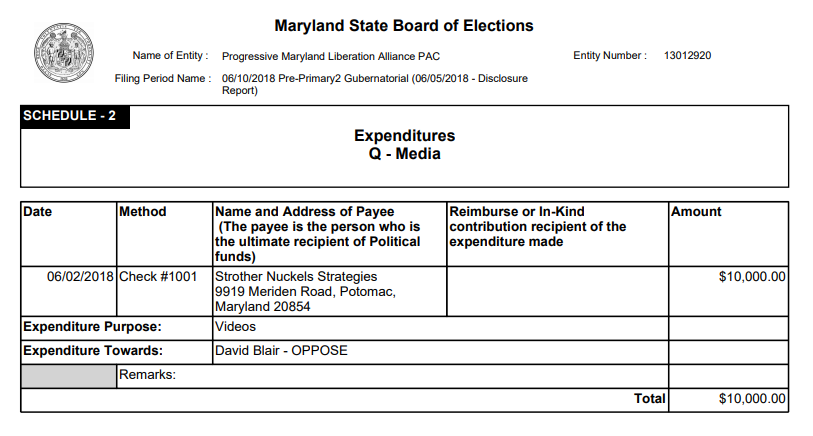
Of these contributions, $10,000 has been spent on a video opposing Blair.  We imagine MoCo voters will be seeing that video soon.

With $80,000 remaining, the Super PAC has enough money to finance mailers and more.  What’s unclear is how much more money it can raise with labor spending almost a million dollars to elect Ben Jealous as Governor and more than $600,000 to elect Donna Edwards as Prince George’s County Executive.  Still, they are playing in MoCo and we expect them to play hard.

Share

Nancy Navarro’s Crane Mailer

By Adam Pagnucco.

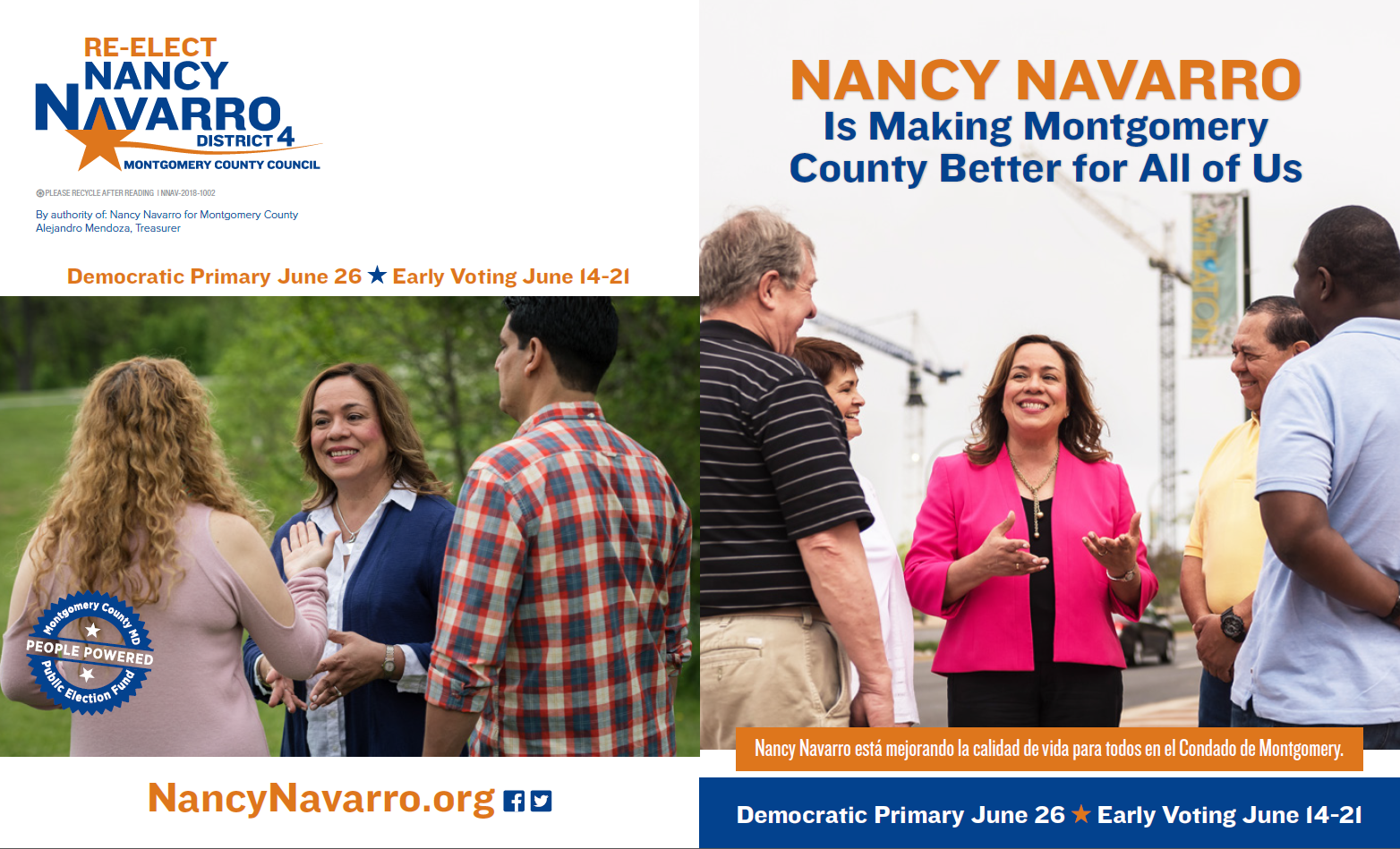
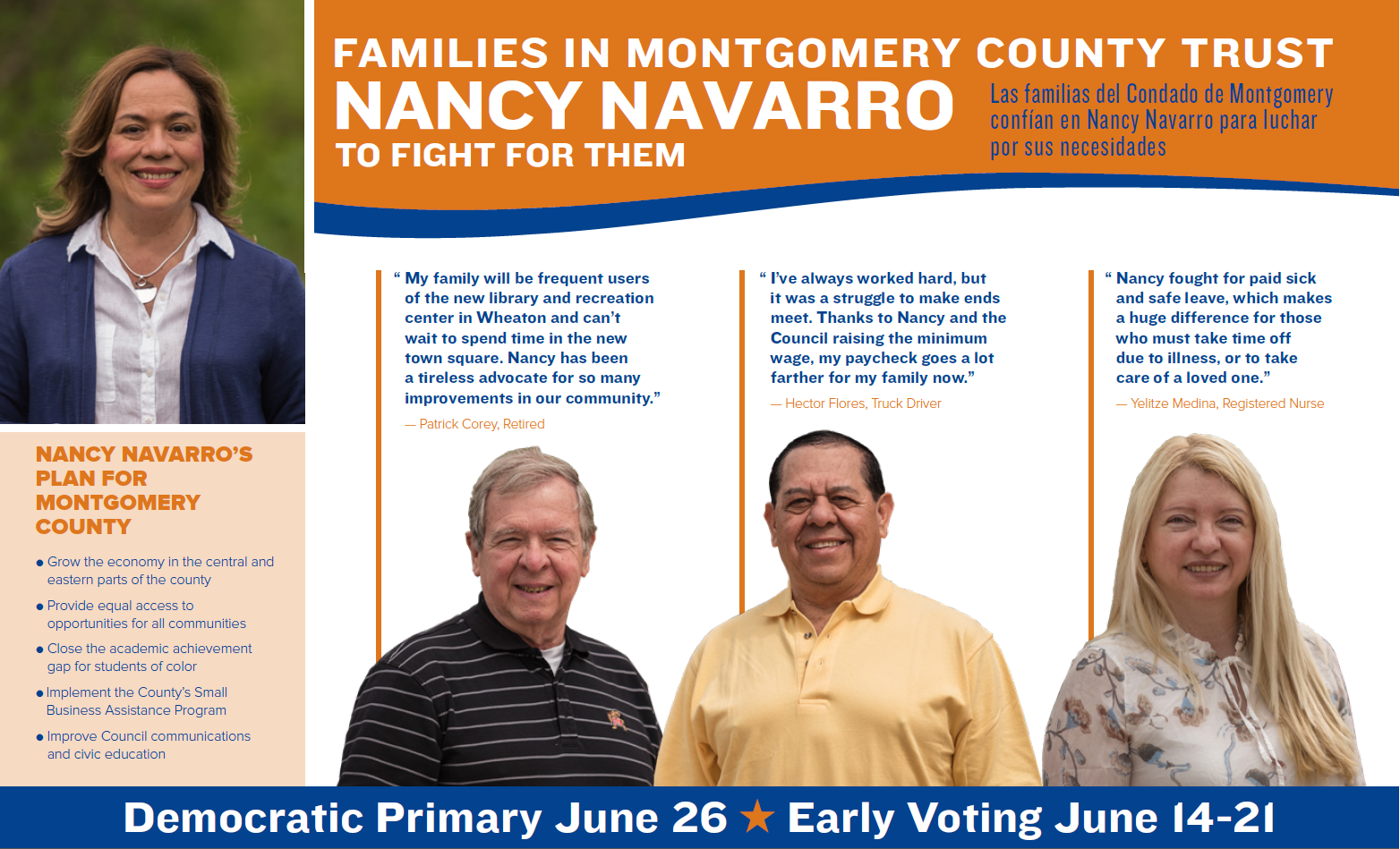
The county government is investing a tremendous amount in Wheaton now, including constructing a new headquarters for Park and Planning and a new library and recreation center.  District 4 County Council Member Nancy Navarro is a big reason why.  She is a fierce, relentless advocate for Wheaton and makes sure the area gets its fair share of county dollars.  Your author is proud to be her constituent.

pink prom dress

Share

A Request for the State Board of Elections and the General Assembly

By Adam Pagnucco.

One of the purposes for the disclosure of political contributions is to help voters decide whom to support in elections.  In order to serve that role, contributions should be disclosed with enough time remaining before the election so that voters can review them before proceeding to the voting booth.  But that’s not quite the case in Maryland.

Recently, we wrote that the percentage of voters who vote early has been rising for years.  That percentage hit a high of 31% in the 2016 general election and could be between 20% and 25% in the upcoming primary.  Unfortunately for some of those voters, they will not have access to the latest campaign finance reports when they vote.  Consider the following entries on the state’s election calendar.

Primary Election

Annual 2017 campaign finance report due: 1/17/18 (11:59 PM)

Pre-primary 1 campaign finance report due: 5/22/18 (11:59 PM)

Early voting begins: 6/14/18

Pre-primary 2 campaign finance report due: 6/15/18 (11:59 PM)

General Election

Pre-general 1 campaign finance report due: 8/28/18 (11:59 PM)

Early voting begins: 10/25/18

Pre-general 2 campaign finance report due: 10/26/18 (11:59 PM)

The above calendar shows that people voting during the first two days of the early voting period will have no way to know about the contents of the last pre-election campaign finance reports when they vote.  This is potentially important because there are sometimes surprises in those last reports.  In 2014, the Baltimore Sun reported on October 26 that Democratic gubernatorial candidate Anthony Brown received a $500,000 loan from the Laborers Union in his final pre-general report, an unusual event that far exceeded the $6,000 limit on PAC contributions.  However, early voting started on October 23.  According to the State Board of Elections, 101,537 people voted during the first three days of early vote in the 2014 general election and would have not seen that report in the Sun.  One can easily imagine similar surprises occurring with regards to big self-funding checks, bundled corporate contributions, out-of-state PAC checks or the like.

To remedy this problem, we request that the State Board of Elections and/or the General Assembly change the due date of the final pre-election campaign finance report to 72 hours before early voting begins.  This will give the media time enough to report on anything interesting in those last reports and for voters to consider it before they head to the booth.

Share