All posts by David Lublin

Who is Behind “Mayor of MoCo” Website?

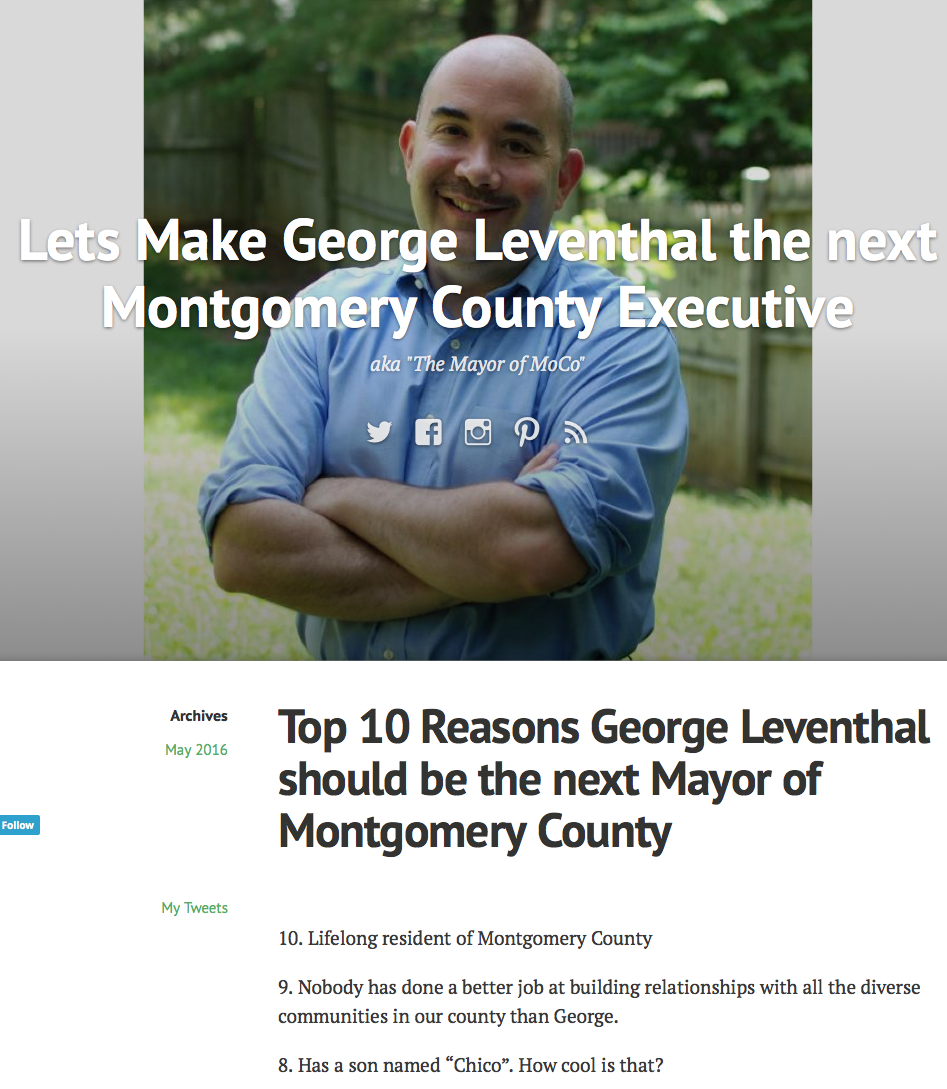
mayormoco1Not too long ago, a web page popped up touting County Councilmember George Leventhal (D-At Large) as the next “Mayor” (i.e. County Executive) of Montgomery County. George is widely known to be interested in the race – he ran last time but withdrew before the primary to run for reelection.

The webpage is funny and gives a list of ten reasons – some serious, some joking – why Leventhal should be the next Exec. The author is seemingly the anonymous “Mayor of Moco:”

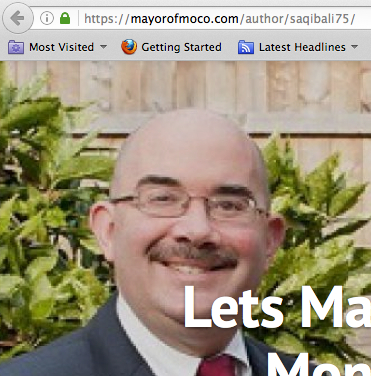
mayormoco2Clicking on the author’s name reveals inadvertently that former Del. Saqib Ali (D-39) is the author. While his name is not mentioned anywhere on the connecting page, it shows up in the URL:

mayormoco3

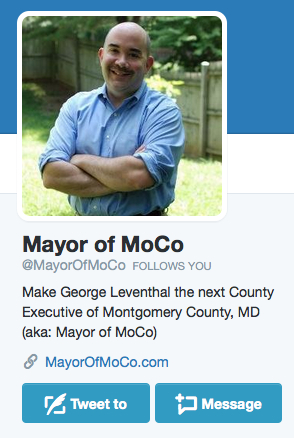
In addition to creating the web page, Saqib has created an anonymous twitter account:

mayormoco5Saqib Ali has been very active in MoCo politics. He won election to the House of Delegates on a slate from District 39 in 2006. When the Senate seat became vacant, he sought it but the Montgomery County Democratic Central Committee selected the much more experienced Del. Nancy King for the vacancy.

Del. Ali spent most of the next four years of his term in the House openly preparing to challenge King for the Senate seat. Indeed, the 2010 Senate primary was exceedingly close but King prevailed over Sleepy Saqib – as Sen. King labelled him during the campaign – by a margin of 3.4%.

In 2012, Saqib made a much less successful run for a Board of Education seat. In 2014, he announced but then pulled back for a run for a seat in the House of Delegates. Since then, he has become known for his activism in support of the BDS Movement, which advocates for boycotts, divestment and sanctions of Israel.

At the Montgomery Priorities Hearing, Saqib testified against legislation advocated by Del. Ben Kramer that would have resulted in the State boycotting companies and institutions that boycott Israel. More recently, he testified as a member of the Steering Committee of Marylanders for BDS on legislation before George’s committee on the Council on County legislation.

During his testimony, Saqib stated that Israeli settlements are “quite close to a war crime.” He then drops the qualifier when he says that “settlements meet the Geneva Convention definition for ‘war crime.” In short, he is now a strong and public advocate for BDS.

George Leventhal’s Viewpoint

George Leventhal kindly replied to my questions regarding the web page and BDS via email. Regarding the web page, George told me:

Saqib is a longtime friend. He let me know that he was planning to express his enthusiasm online about my potential candidacy for County Executive, but the “Mayor of MoCo” initiative is his alone, and I have had no involvement in it.

If I decide to run for County Executive, I will welcome Saqib’s involvement and will hope to win the support of a wide range of county residents, but I am a long way from making any decisions regarding 2018. In my four successful election campaigns, I am honored to have had the support of many activists in both the Jewish and Muslim communities, as well as many other communities. As an at-large councilmember who has represented more than one million constituents for nearly 14 years, I would not expect to agree with every opinion of every one of my supporters.

George’s point about not agreeing with everyone of his supporters is a good one. Who does? However, Saqib is not some random supporter among many.  Saqib and George may well have become closer allies over George’s support for efforts to incorporate a Muslim holiday into the school calendar – a positive effort that is about recognition and inclusion. But George’s “longtime friend” is also leading local activist in support of BDS who is a former state legislator and has testified at least twice on the issue. At the very least, George raised no objection to this page, which represents his first public move for a bid for County Executive. As a result, pro-BDS Saqib seems more than some minor supporter.

George also shared his views on the BDS Movement:

I do not associate myself with efforts to boycott Israel or divest from it or impose sanctions on it. I feel a deep affinity for Israel, which I have visited three times. My sister lived there for several years. I support a two-state solution. In general, I would describe my views on the Israel/Palestine issue as consistent with those of J Street.

I would not characterize Israeli settlements in the West Bank as a war crime, although I think they are extremely counterproductive to the goal of peace in the Middle East.

While many might disagree with George’s views on BDS or Israeli settlements as either too liberal or too conservative, I’d say they fall right in the mainstream of Jewish and American opinion.

Some might argue that Donna Edwards’s identification with liberal J Street did her some harm in the Democratic primary, and that the same fate could befall George. More hardline pro-Israel voters do indeed reject J Street. Many others, however, would find George’s viewpoints utterly reasonable.

The more serious political problem is when a candidate is perceived fundamentally unsympathetic to Israel. In George’s comments, that is clearly not the case, as he strikes a smart balance of “deep affinity for Israel” and support for a “two-state solution.” But linkage with a prominent BDS supporter in what is essentially his prospective campaign’s first outing undermines that perception.

Moreover, Saqib is working to make this linkage stronger. He has now become the first person to attack me on Twitter before I even drafted a piece. Expressing anger at my “smears” and “appalling tactics,” Saqib then turned to faux outrage that I won’t open up this space to him. I look forward to all the pro-BDS webpages opening up their space to AIPAC and J Street.

All of this is helpful to getting Saqib Ali more attention but it sure doesn’t help George Leventhal.

Foreign Policy in County Elections?

Normally, I would not think foreign policy terribly relevant to a campaign for county executive. Aside from the nice Sister Cities program, my hope would be that any county executive focus on the nuts and bolts of making the County work well. But Saqib’s repeated public interventions show how views on the Israeli-Palestinian conflict can  become intertwined with even local politics.

The injection of a prominent BDS supporter as part of George’s effort to stick his political toe publicly in the water will likely raise concerns among the many voters who oppose BDS and does not help us keep focused on the issues that matter – the ones on which George Leventhal has spent the vast majority of his career and has exhibited a great deal of genuine passion for over the years.

Share

Ideas for Metro

Today, I am pleased to present a guest post by Dels. Marc Korman (D-16) and Erek Barron (D-24):

When we arrived in Annapolis in January of 2015, we immediately partnered to form the WMATA-Metro Work Group and bring more attention to issues related to Metro in Annapolis.  After all, the state invests hundreds of millions of dollars to WMATA each year and increased oversight is sorely needed.  We are cautiously optimistic that the new General Manager, Paul Wiedefeld, can bring some much needed change to WMATA.  He has set out his own plan for reform, much of which we enthusiastically support.  But after spending two legislative sessions hearing from WMATA officials and other stakeholders on an almost weekly basis, we have some of our own reform suggestions.  Some of these are major structural or funding changes and others are more minor tweaks to Metro operations, but we think all are worthy of discussion by WMATA and the region.

Out the outset, we should note that none of these ideas can replace or should distract from the immediate safety work necessary for the system to operate.  SafeTrack and other efforts are important, but it is our hope that some of these ideas can keep the system from finding itself in a situation like the one it is in now ever again.

Board

Board Structure: The WMATA Board is the primary means of providing oversight of Metro.  But each appointing jurisdiction treats the Board in a different fashion.  In Maryland, Board members are Gubernatorial appointees and answer to the Governor.  In the District of Columbia, usually a Councilmember and a Mayoral appointee serve as the Board Members.  In Virginia, there is a divide between state and local appointees.  The District and Virginia have elected officials on the Board, while Maryland and the federal government do not.  The Board members all receive different levels of pay from their jurisdictions.  This structural mismatch causes disharmony on the Board, makes Board members’ different perspectives even more pronounced, and is generally inefficient.  Standardizing how each jurisdiction treats the Board so that their appointees are similarly positioned would improve the Board’s critical governance function.

Resources for Board Members: The WMATA Board is a strange beast.  It is the primary method of oversight for WMATA, yet its Board Members essentially have no resources.  Board members who are elected officials or work in government may be able to use those resources to support their work, but other members do not have those options.  Consideration should be given to providing board members with the resources and ability to provide adequate oversight and independent analysis of WMATA activities, instead of being forced to rely entirely on WMATA staff.

Board Meeting Options: WMATA board meetings seem to follow a basic pattern in which WMATA staff tells the Board what they want to do on an issue, the Board asks a few questions, and the item is usually agreed to.  Sometimes, the Board pushes back and the staff has to withdraw the item and come up with alternatives at a future meeting.  Staff should consider providing more options up front for the Board on major issues (such as fare options) and let the Board make more informed decisions on the basis of those options.

Public Meetings and Access: WMATA Board Members have made an effort over the last year or two to show up at stations and meet with riders.  Far more of this public engagement and outreach is necessary. Whether that is stepped up station visits, rider-focused town halls, or better use of social media, WMATA needs to engage its riders. Twitter, for example, is not a random sampling of riders, but the frustration expressed in the Twitterverse is palpable and more opportunities need to be created to allow riders to express their concerns to WMATA board members and personnel.

Auction Board Seats: Someone in Annapolis suggested this idea to us.  If jurisdictions want more say over how WMATA operates, they could compete for additional Board seats—with an overall cap—through an auction process: a Board seat could be bought in exchange for additional operating or capital subsidies.  This could provide WMATA with necessary additional revenue.

Secretarial Board: An entirely different Board model has been floated by a WMATA board member, which would be to have a more focused Board made up of the Transportation Secretaries—or an Assistant Secretary—from each jurisdiction.  It would be a radical change from the current model, but might make WMATA more politically accountable by tying the Board more directly to the elected leadership in each jurisdiction.  There are issues with this approach, such as how to handle Virginia’s localities, but this is a radical reform that should be discussed.  If this radical reform is a bridge too far, then perhaps an “Executive Council” of each jurisdiction’s transportation secretaries could meet on a regular and scheduled basis to address major issues, providing guidance to the Board as to what will be acceptable to the compact members.

Funding

Dedicated funding: Probably the number one suggestion people have about WMATA is a dedicated funding source.  Currently, only Northern Virginia has any “dedicated funding” for WMATA, with a 2% gas tax being allocated to WMATA and making up less than 15% of the entire Virginia operating subsidy.  Meanwhile, the District of Columbia actually passed legislation in 2006 dedicating one half of one percent of its retail sales tax to WMATA, but it was contingent on similar action by the other jurisdictions which never occurred (it was estimated that this would raise $50 million) at the time.  Dedicated funding would not be a cure all for Metro’s woes, but would definitely help.  Options for dedicated funding include a regional sales tax, transfer tax, a property tax supplement for property near Metro, and several other options.  Although progress on this issue continues to lag, it should remain a part of the conversation.  Board Chairman Jack Evans has made it front and center to his agenda, although any funding change should come with governance and management reforms.

Federal Operating Subsidy: All of the Compact jurisdictions, except the federal government, provide an operating subsidy to Metro.  Indeed, the federal government was given Board seats in exchange for a non-guaranteed annual capital appropriation of $150 million.  The federal government should also provide an annual operating subsidy to WMATA, just as other jurisdictions with Board seats do.  This should become a top priority for our region’s Congressional leaders.  Again, Board Chairman Evans has rightfully been discussing this issue.

Stations

Station Ownership: Station Managers need to take more ownership of their stations.  The new GM’s plan includes establishing management ownership of each rail line to improve the customer experience and something similar should occur with the Metro stations.  Some Station Managers do stand outside of the control booth and take pride in their stations, bar far too many are inaccessible in the control booth and unaware of what is happening in the station, not making sure it is welcoming, clean, and functioning.  Station Managers should be appropriately compensated and incentivized to take more ownership of their stations.

Station Task Forces: In one of our districts, a group of local residents, businesses, and government leaders formed a station improvement task force to try and improve the Bethesda Metro Station.  Their efforts have improved cleanliness at the station, brought in new public art, and put Bethesda at the forefront of station modernization efforts.  This model should be followed at every station in the system to make sure every community is getting the attention and improvements it deserves.

Escalator Alignment: Most stations have a standard traffic flow to them.  Those in downtown DC have more exiting passengers than entering passengers in the morning and vice versa in the suburbs.  Yet escalators are not regularly adjusted for this natural schedule.  If a station has three escalators, two of the escalators should be aligned in the direction of the most travel and that should be switched at the appropriate time during the day by Station Managers.  This will reduce crowding and be generally more convenient for riders.

Vendors: Even with declining ridership, thousands of people stream in and out of rail stations and major bus stations on a daily basis.  WMATA needs to focus more on revenue capture from these opportunities, such as shoeshine stands, coffee shops for those exiting, or even small pharmacy stands.  WMATA needs to get aggressive about alternative revenue options besides fares and jurisdiction subsidies.

Signage: Metro stations are hard to navigate, particularly for tourists.  Those unfamiliar with where they are try to squint through grimy windows into dark stations with signs few and far between.  Someday, when all the railcars are new, station announcements will be clear and in-car displays will explain what station the train is at.  But there is no need to wait to add additional signage throughout Metro stations.

Metro Aesthetic: Metro stations were built as cathedrals with high ceilings, dim lighting, and an expansive feel.  Unfortunately, the large stations are hard to heat and cool, the lighting fixtures and walls are difficult to clean, and the darkness raises safety issues and is inconvenient for passengers waiting for single tracking trains while trying to read.  Yet many traditionalists want to maintain this “Metro aesthetic” as though the system were new.  We cannot be bound to the design decisions of decades ago.  Some stations can be preserved for historical reasons, but most should be updated and modernized when funding is available with better signage, lighting, and less “Metro brown.”

Maintenance

Easy Infrastructure: Within the past few years, an additional stairwell between the platform and Mezzanine was added at the Bethesda Metro station.  This low cost and easy infrastructure improvement has eased escalator crowding and spread people out at the station.  Additional easy infrastructure changes should be quickly evaluated and undertaken as they are low cost but high reward.

Repeat Work: There is a concerning pattern with WMATA needing to repeat maintenance work multiple times.  A recent example of this was the inspection of the jumper cables on the day of the shutdown.  These cables had supposedly been inspected after the L’Enfant Plaza incident, but somehow major problems were missed.  We are also on the third attempt at sustainable escalator repairs: We began with spot fixes; WMATA then tried to take apart, clean, and rebuild the escalators; and now we are on full replacement.  Recent discussion of the need to potentially close entire lines for more maintenance—after years of a capital program that has been extremely disruptive—may be the latest example of the necessity for repeat work.  How much other work is being done multiple times?  WMATA needs to quickly get to the bottom of this problem.

Single Tracking: One of the major frustrations with Metro’s rebuilding efforts is the single tracking and long delays.  Indeed, the system is virtually un-rideable on the weekends.  But many transit systems operate on only two tracks.  New York is actually unique in the amount of track redundancy it has built in.  WMATA should canvass other transit systems to make sure it is using modern best practices when it comes to serving its customers safely while doing necessary rebuilding.

Fares

Low Income Fares: The maximum WMATA rail fare is a whopping $5.90, compared to a flat cost of $2.75 in New York City or $2.50 in Atlanta.  Because of that high cost, many low income riders cannot use the system.  Some jurisdictions, such as Boston, are experimenting with lower fares for low income riders.  WMATA should follow suit.

SmarTrip on MARC: Baltimore City and WMATA have an interoperable SmarTrip card.  But the transit option that connects them—the MARC train—does not accept SmarTrip.  WMATA should work with the Maryland Transit Administration to change this and truly connect these two urban centers.  We are biased towards Maryland, but if Virginia wants to pursue something similar on the VRE, that should be supported as well.

Safety

Safety Culture: Safety culture is discussed a lot in reference to WMATA.  Supposedly, a safety culture was established after the Fort Totten incident but ongoing events suggest otherwise.  The new General Manager seems to have really changed the tone at WMATA.  One of the issues we have observed is that the “safety culture” at WMATA often boils down to checking off NTSB or FTA safety recommendations and directives.  But a safety culture is not just checking boxes to rectify previously identified problems.  It requires all WMATA personnel to be looking over the horizon for other safety issues and concerns.  That is the attitude WMATA management needs to demand and implement.

Rail Operations Control Center: Reports about the Rail Operations Control Center (“ROCC”) are incredibly concerning.  WMATA claims it has new employees in training to re-staff the ROCC, which is currently understaffed.  But there are reports that the current staff at the ROCC push new people out to protect their overtime.  This obviously needs to be seriously addressed.  One idea is to raise the base pay of those in the ROCC and bring on more, trained people quickly.  Some may view such a move as rewarding bad behavior, but something has to be done quickly to improve the climate at the ROCC and its contribution to a safe system.

Bus Mirrors: Many of the safety issues currently discussed relate to rail, but there are bus issues as well.  One issue raised by bus drivers is that the side rear view mirrors block sight lines and endanger pedestrians who drivers cannot see.  This has been the subject of litigation in other jurisdictions and there are simple solutions to reduce the size of mirrors and improve safety.

Automatic train control (“ATC”)

Metrorail has operated largely without automatic train control since the 2009 Red Line collision.  Last spring, ATC was restored for eight car Red Line trains, but six car trains and trains on the system’s other lines remain in manual control.  Restoring ATC system-wide is crucial for both safety and reliability.  Currently, it is not uncommon for train operators to have to move their train a few additional feet forward to meet the end of the platform after stopping at the station.  This creates a jerky experience for riders as they prepare to exit the train, since most don’t expect the train to move again once it’s already stopped.  Less frequent but far more inconvenient are instances where a train operator overshoots the platform and must skip the station altogether.  Returning to ATC will eliminate these problems while increasing safety and reliability.  While restoring ATC and ensuring that it functions safely is a large and complex task, it must remain a priority in order to make the system safe and convenient.

Riders Advisory Council (“RAC”)

RAC Selection: Metro’s RAC has six members each from Maryland, Virginia, and DC, two at-large members and the head of the Accessibility Advisory Committee.  Members are appointed by the WMATA Board.  An alternative approach that would improve RAC independence would be to have the RAC appointed by the heads of the state or local governments in the WMATA Compact.  That would ensure that the RAC is truly independent of the Board and representing the riders.

RAC Jurisdictions: RAC’s members in Maryland and Virginia are all from the local jurisdictions that make up the Washington Metropolitan Area Transit Zone (Arlington, Fairfax, Loudon, Alexandria, Falls Church, Montgomery, and Prince George’s).  But there are many riders from other nearby counties such as Frederick or Prince Williams.  The option should be available to have RAC members, perhaps the at-large members, from these other jurisdictions.

Miscellaneous

Benchmarking: One Montgomery County Councilmember has called for benchmarking WMATA to peer systems.  This type of public benchmarking would be helpful and is already in use by some systems.  Every system is different, but it would be useful to see how WMATA compares to peers on some key indicators such as on-time performance, car utilization, and so on.  Community of Metros (“CoMET”) is already doing this type of work and WMATA should join the effort.

Ride Sharing: There has been concern expressed recently about ride sharing’s effect on transit and whether ride sharing can be adequately used for paratransit.  WMATA should begin pilot programs to use ride sharing to connect some riders’ last mile connections to bus and rail transit.  Usually, riders need to be less than a half mile from transit to regularly access it on foot.  Ride sharing can expand that envelope.

Archives/Documents Office: WMATA no longer has an official in charge of preserving and making publicly available historic documents.  This reduces public accountability for WMATA’s actions.  If you have ever read Zachary Schrag’s The Great Society Subway, an incredible account of WMATA’s history, you know the insight that can be provided by making historical material available.

Ridership Reports: Last year, Maryland passed legislation requiring a Maryland-specific ridership report from WMATA.  Most of the data is already collected by WMATA, but this required a jurisdiction-specific report to demonstrate how WMATA is used, especially by those outside of the Montgomery and Prince George’s County.  Ridership from other counties outside the compact helps justify the substantial expense Maryland rightly pays for WMATA.  Ridership reports that similarly track DC, Virginia, and even federal employee and contractor ridership would go a long way to demonstrating in detail the benefits of the system.

Jurisdiction Work Groups: WMATA oversight is complicated because of its multi-jurisdictional nature.  When we were elected, we formed a work group in Annapolis to try and provide some oversight to the system.  Indeed, almost every week during our legislative session we are joined by a WMATA staff member or other stakeholder to discuss in detail some of the issues, challenges, and opportunities before Metro.  We believe this is a useful model that the other jurisdictions should follow.  Oversight by the jurisdictions tends to come after emergencies, but real oversight is regularly occurring and not just reactive.

Reduce Turnover: WMATA has a surprisingly high turnover rate.  Between 2009 and 2013, 417 of 535 train operators turned over.  Considering that these are well compensated union jobs, that is a high turnover rate.  Reducing that turnover rate for train operators and other positions will allowed better trained and experienced personnel to operate the system.  That does not mean WMATA should retain personnel not acting appropriately, but turnover should not be systematically high.

Real Estate Coordination: WMATA has a robust real estate development operation as it tries to improve transit-oriented development on land it owns around stations.  That office could improve in two ways.  First, much more communication and coordination is needed with local elected officials who represent the areas around the stations and with the local business community and residents.  These stakeholders have little insight from WMATA on their plans.  Second, the real estate office is solely focused on WMATA’s holdings.  But it has great expertise in transit-oriented development that it could offer to other landowners around stations to make sure that we are meeting our economic development goals around Metro.  Another outside the box idea being floated is to spin-off this function from WMATA entirely, which is certainly an idea worth considering.

Parking: WMATA operates 44 parking facilities at Metrorail stations.  This means that in addition to all of its other functions, WMATA is also managing a whole other line of business, parking.  WMATA needs to consider whether the parking business should be subcontracted or even spun off into another public entity to better manage its operations.

Metro Innovation: Another unfortunate trend we have noticed during our Work Group meetings is a status quo culture: WMATA personnel’s insistence that everything is going according to plan.  WMATA rarely admits errors or mistakes and often gives the impression that if they were just left alone by the public and the press, everything would be fine.  This status quo attitude is obviously not shared by the new GM, but that is another cultural issue that needs to be addressed at the agency.  To change this culture WMATA should encourage its leadership teams to select system challenges and, following the path of the tech industry, think of new approaches to bring value to WMATA and its customers.  One area ripe for innovation is Metro Access, the paratransit service.  This service is costly and causes frustration for many users.  Innovation in Metro Access is absolutely necessary whether it is more pilot projects for certain populations as currently exists in Montgomery and Prince George’s County where regular, dedicated drivers are being used for certain groups; better GPS technology for routing; or even ride sharing with adequate protections where appropriate.

Share

Fosselman Not Seeking Reelection

Kensington Mayor Pete Fosselman is not seeking reelection to a sixth term this year. He has asked Councilmember Tracy Furman to file for Mayor and she has. Among the highlights of Fosselman’s tenure was the approval of the new sector plan allowing for higher density in downtown Kensington.

This will be a real change in leadership for Kensington. Beyond winning five terms, Pete has been deft at managing Council meetings and very successful in getting his preferred candidates elected to the Town Council.

Share

Will Hogan Sign the College Affordability Act?

college_debt

The Governor has indicated his support for giving $37.5 million in corporate welfare subsidies to Northrup Grumman but he hasn’t yet taken a position on this bill. State Sen. Rich Madaleno has started an online petition to encourage Gov. Larry Hogan to sign the College Affordability Act:

We have a serious problem in our state.  Too many Maryland students simply cannot afford to go to college, and too many graduates are loaded down with excessive amounts of student debt – the average debt of a college graduate in Maryland exceeded $27,000 last year.  If we do not get control of the spiraling cost of college, we will confine a generation of our young people to poor employment and economic opportunities.

This year the Maryland General Assembly passed “The College Affordability Act of 2016” (SB676 & HB1014) to address this serious concern.

This landmark bill helps Maryland families and graduates in the following critical ways:

  • Encourages families to save for college by offering matching funds for anyone who puts money annual into a college savings account, and
  • Reduces the cost of student loans by providing tax credits to Marylanders paying down their student debt.

The College Affordability Act of 2016 will impact up to 20,000 Maryland families every year, and it passed the General Assembly with overwhelming majorities.

Now it’s time for Governor Hogan to sign the bill into law!

Sign the petition to help amp up the pressure on the Governor to take a small step towards reducing college debt. It’s a Change Maryland should support.

Share

The Content of the Governor’s Character

maryland_governor-trump

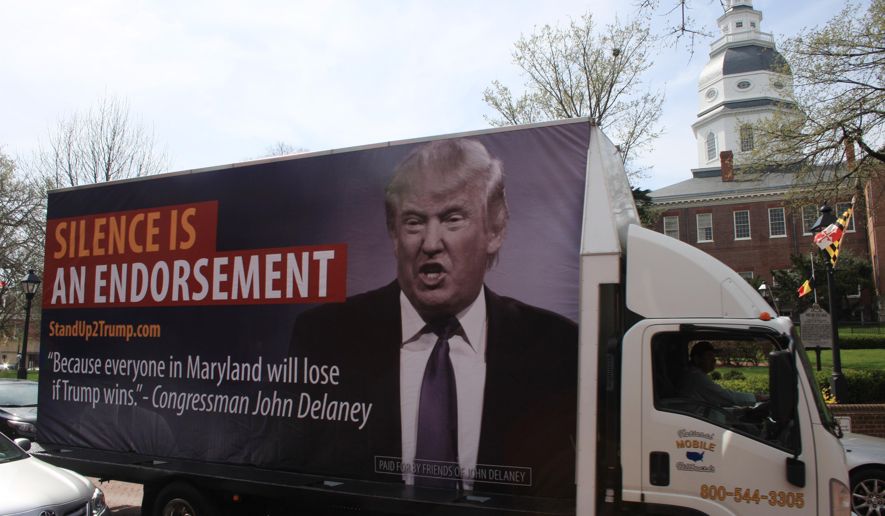
Gov. Larry Hogan has already failed two character tests in this year’s presidential race. Will he fail a third?

Chris Christie

The George Washington Bridge scandal was rightly a major turning point in Chris Christie’s reputation. This unbelievably petty revenge on the Mayor of Fort Lee for not endorsing his reelection bid revealed Christie as a bully and possibly also incompetent.

Christie may well have ordered the closure of the access lanes that led to the completely unnecessary gridlock, as suggested indirectly by his effort to stop New York Gov. Cuomo from investigating and attempts to downplay the events.

Alternatively, we can believe that Christie’s claims that he didn’t know. Of course, this requires belief that the same guy who took credit for being all over the Hurricane Sandy recovery effort had no idea what was going on in his office let alone the State. Moreover, he did such a poor job setting the tone among top aides that they thought this was acceptable behavior.

Neither option says much about Christie’s leadership skills but Hogan endorsed him anyway. No doubt Hogan sees himself as Christie’s ideological soulmate and wanted to repay Christie’s support during Hogan’s successful campaign.

The depth of Hogan’s poor judgement in supporting Christie became clear to all when beta male Christie rushed to endorse Donald Trump effusively after the Donald had beaten the bully and showed him who was the pack leader.

The Maryland Primary

By the time Maryland’s primary rolled around, the race was down to Trump, Texas Sen. Ted Cruz, and Ohio Gov. John Kasich. Not an enviable set of choices but a pretty easy one. I may not care for Kasich’s policies but he seems like a decent person. He probably wouldn’t be a great president (most aren’t) but I think most Americans wouldn’t sleep badly with him in the White House.

In contrast, Trump and Cruz are genuine dangers to the country. Trump is out of the same mold as extreme-right European politicians like France’s Marine Le Pen. Like her, he doesn’t care much for immigrants, is xenophobic to the point of suspicion of even our allies, has authoritarian tendencies, and lacks confidence that America can compete in a global economy. And these are his good qualities.

Cruz is a more home grown version of the extreme right. An social and economic extremist – one hesitates to label him “conservative” – this attorney believes that the president can nullify Supreme Court decisions that he deems unconstitutional, such as on gay rights. More popularly, he wants to eliminate the IRS, which will make collecting taxes for his expanded and busily bombing armed forces difficult.

While anyone who runs for president surely has a healthy ego, the level of narcissism in both and Trump and Cruz is extreme. During the unforgettable debate that discussed the size of Trump’s anatomy, Kasich was the only person on the stage who passed the “normal human” test.

Yet Gov. Hogan took a pass on exerting his considerable influence on Republican voters during the primary. Kasich may have had zero chance of winning the nomination even at that point but Hogan failed to stand up for his party or the country, as Trump went on to win 54% of the vote here.

Third Strike?

And so it has come to this.

The Republican Party, a party with an illustrious history, is now reduced to nominating someone completely unfit for the office. He and his policies are not just disagreeable in the ordinary way that one often doesn’t care for the policies of the other party of their nominee. Trump’s ideas, such as they are, are abhorrent and ruinous. While terms like bigoted and sexist are sometimes thrown around too easily, they apply here.

Larry Hogan now faces a set of unenviable choices. He can endorse Trump, which seems unlikely if only because Hogan has a healthy instinct for political survival. Hogan could continue his silence in an effort to stay out of the fray and avoid alienating the majority of Republican voters who chose Trump and overlap with much of his own constituency.

Alternatively, Hogan can step up and speak plainly as to why Donald Trump doesn’t represent him, and should not lead the country that he loves. Hogan can explain that he’ll enthusiastically support other Republicans down the ballot but that he will leave the presidential ballot blank or write-in the name of some decent individual who shares his political convictions.

In short, he can do the right thing.

The real test of leadership is not when the path is easy but when you have to make politically difficult choices. The good news with this one is that the “man in the mirror” test should make it easy to make and to live with come what may.

I hope the Governor makes the right one. Frankly, the Republican Party and the country are going to need people who do.


Share

There is Still Time to Move to District 20 or 40

vacancy

Eighth Congressional District Democratic Nominee Jamie Raskin will presumably vacate his State Senate seat some time after the November elections. A number of people’s names are already being bandied about to fill the seat, including Heather Mizeur who  represented D20 in the House of Delegates until 2015 but now lives on the Eastern Shore.

Good news for Mizeur and any other potential Senate aspirants. There is still time to establish residency in D20 because Article III, Section 9 of Maryland’s Constitution requires that legislators live in a district for only six months in advance of the election. May 9th is six months before the day after Election Day.

Sen. Raskin could wait until being sworn into Congress to resign his seat, which would delay the appointment process. As the General Assembly session begins in January, I imagine he would want to start the ball rolling earlier, so that someone could be in the seat from the beginning of the session.

Of course, all of the above also applies to District 40, which can expect with equal certainty that now Sen. Catherine Pugh will become Mayor of the City of Baltimore after the general election. So watch for any moving trucks in these districts!


Share

Ervin Canvassing Support for Senate Vacancy

valerieervinglogoFormer Montgomery County Councilmember Valerie Ervin is already canvassing support for the expected vacancy in the State Senate when Eighth Congressional District Democratic Nominee Jamie Raskin wins election to the U.S. House.

Ervin represented District 5 on the County Council from 2006 until she stepped down in 2014. She served on the Board of Education for two years prior to winning her Council seat. After leaving public office, Ervin served as the Director of the Center for Working Families and then the National Participatory Democracy Project.

Though Ervin worked most recently for progressive causes, she had excellent ties with the business community during her time on the Council. Earlier this year, she briefly sought the Democratic nomination for the Eighth Congressional District but abandoned the race due to fundraising difficulties.

Despite this setback, Ervin will be a formidable candidate. In the Washington Post, Ervin expressed her frustration at Donna Edwards’s defeat and her strong belief that the party needs more diverse candidates.  Ironically, for the Maryland Senate, this may not be the best comparison as black men are much more underrepresented than black women.

Six of the nine of African-American senators are women, so black women are 12.7% of the Senate membership, as compared to 15.8% of the population – a gap of 3.1%. In contrast, black men comprise 6.4% of the Senate, less than one-half their share of Maryland’s population.

A more advantageous comparison for Ervin is within Montgomery County, which has no African-American senators, though blacks are 18.8% of the population. Three of Montgomery’s eight senators are women – a decline of one from after the election due to the replacement of Karen Montgomery by Craig Zucker.

Regardless, as likely the most experienced politician by far to seek the vacancy, Ervin would bring much more to the race than her race or gender, though both would be assets to a Democratic Party seeking more diversity in its legislative delegation.

In the wake of Edwards’s defeat, Ervin has been hesitant to support Democratic U.S. Senate Nominee Chris Van Hollen. This may just be an election night reaction after a tough loss but she’d do herself a lot of good with the Montgomery County Democratic Central Committee, which will fill any vacancy, if she’d endorse him quickly.

Share

Division at Unity Rally?

The Democratic Unity Rally may not have been the best way to demonstrate that Maryland Democrats are united moving from primary seats towards November.

On the good news front, Joseline Peña-Melnyk and Glenn Ivey both showed up and were gracious in their support of Democratic Fourth Congressional District Nominee Anthony Brown.

From the Eighth Congressional District, Kumar Barve and Joel Rubin came and lent support to Democratic Nominee Jamie Raskin. (UPDATE: Will Jawando was there too.) David Trone, Kathleen Matthews and Ana Sol Gutierrez were not there but I know that both Trone and Matthews have endorsed Raskin. No information on Gutierrez but I’d be surprised if she was not supportive of her colleague in the General Assembly.

The biggest rift remains from the U.S. Senate race. Rep. Donna Edwards was noticeably absent after her tough loss to colleague Chris Van Hollen. People in the Edwards camp believe she was badly treated by establishment Democrats and the Washington Post.

Frankly, I think these day-after the election events are a bit hard on the candidates. All are exhausted from lack of sleep and emotions are often understandably raw. I admire the people who didn’t win for showing up – it’s a good, gracious, and right thing to do.

But I can also understand those who just need a moment. Regardless, I look forward to moves in coming days by both Edwards and Van Hollen to help bring Democrats together.

Share

The Nation Analyzes Edwards’s Loss – and Misses the Story

Rep. Donna Edwards’s Strong and Gracious Concession

 Black women are the bedrock of the party, and yet Edwards’s loss is a sign that they still don’t have a place at the table” was the subhead of the The Nation‘s article delving into Donna Edwards’s loss. Yet, rather than providing good analysis, the article desperately works to make facts fit its narrative.

Racial Demographics and Voting

The racial statistics alone show its bedrock problems. Nowhere does the article mention that African Americans formed the largest share of Democratic primary voters — 48% compared to just 42% of whites according to the Washington Post. So this clearly was not just a case of the white majority shutting out the black minority, since there was no white majority.

What happened? The article mentions but elides over that Chris Van Hollen’s share of the black vote, 37%, was about twice as high as the 19% of the white vote won by Edwards. Van Hollen had a 53 point (72-19) margin among whites while Edwards had just a 20 point margin (57-37) among blacks.

Chris Van Hollen won convincingly in large part because he worked for and won a sizeable minority of African-American votes. White candidates fighting hard for and winning over African-American votes is not exactly something to lament.

Van Hollen also won women (53-39) by virtually the same margin as men (54-37), so the gender explanation carries even less weight.

The Machine

The other major trope of the article beyond racial dynamics is that Maryland’s political “machine” was stacked against the Edwards campaign, and this is emblematic of the general opposition of it to the elevation of black women.

Meanwhile, Baltimore Democrats nominated African-American State Sen. Catherine Pugh for the mayor’s office. I would call this a breakthrough except its not. Future Mayor Pugh will succeed a black woman who succeeded another black woman.

One can hardly call this a victory by Pugh against the establishment. Pugh’s colleagues in the State Senate lined up to write her $1000 checks for her mayoral bid. By the way, the State’s Attorney and two-thirds of Baltimore City’s State Senators are also black women. Marylanders do not find this either weird or novel.

The Nation deplores that Edwards didn’t win most Maryland establishment support, black or white. They’re correct there. Heavy-hitter Rep. Elijah Cummings sat this one out and Prince George’s County Executive Rushern Baker endorsed her opponent. So did former Maryland Democratic Party Chair Yvette Lewis and Montgomery County Executive Ike Leggett.

Here are Baker and Leggett explaining why they chose to endorse Van Hollen over Edwards – a question left unasked by the The Nation except to ascribe it to the mysterious machine and a generic unwillingness to support black women:

Perhaps we could avoid rushing to call all of these people machine politicians, sell outs (or worse), just as I would hope that one would avoid doing the same for the prominent white endorsers of Donna Edwards, such as former Montgomery County Executive Doug Duncan and Sen. Karen Montgomery.

Insiders and Outsiders

The insider-outsider label is an interesting one and a matter of perspective. Edwards has served for four terms in Congress representing suburban DC. She received millions and millions of dollars of support from large donors via EMILY’s List.

The Nation leaves unmentioned that Donna Edwards originally won her first unquestionably outsider campaign because of support from white progressives. In both of her first two elections for Congress – the one where she nearly beat centrist, establishment Rep. Al Wynn and the one where she did – Edwards did massively better in the white than the black portion of her district. So much for the invincible machine or hostility of white progressives.

Virtually all of the white Democratic establishment also lined up behind soon-to-be Rep. Anthony Brown’s unsuccessful gubernatorial bid. Brown defeated sitting Attorney General Doug Gansler and progressive Del. Heather Mizeur, who The Nation accuses of fomenting racial slurs for stating that Van Hollen’s office provides far superior constituency service to Edwards’s.

Donna Edwards rightly pointed out the obvious desirability for more diversity in the Senate. Frankly, I’d be surprised if Maryland does not elect an African American to statewide office soon (not counting the Lt. Gov with no disrespect meant to the current or previous incumbents who were elected on tickets).

But the narrative that Donna Edwards lost simply because Maryland whites or political establishment just couldn’t cope is too facile. The Nation grudgingly concedes Van Hollen is “nearly as progressive” albeit “not quite” as Edwards. The attempt to turn tiny differences into an ideological canyon failed.

Moreover, like so many this year, Edwards tried to turn her isolation from other politicians into a virtue and Van Hollen’s connections into a vice. Except that Van Hollen argued convincingly that progress only gets made by working with others, using his legislative record and firm stand for liberal values to back it up.

Anyone less talented or respected than Chris Van Hollen probably would have lost to Donna Edwards, who is engaging and formidable on the stump and had strong financial backing. I don’t blame Donna Edwards and her supporters for feeling the loss. It didn’t happen this time.

But, despite the Nation‘s near despondency, all is far from politically lost for progressive African-American women in Maryland even if Donna Edwards didn’t make it this time. I have no doubt that her supporters – and many of Van Hollen’s – will use that energy to win the next one.

Share

Election Morning Wrapup

Democratic Presidential Primary

The breadth of Hillary Clinton‘s victory is hard to overstate. She won all but three very Republican counties. She lost tiny Garrett by 119 votes (6%), Allegheny by 158 (3%), and Carroll by 170 (1%). The other jurisdictions went Clinton, including Montgomery (67%), Prince George’s (74%), and Baltimore City (65%).

Sanders won millennials but there just weren’t that many of them–over 45 voters were two-thirds of the electorate and 74% voted for Clinton. Women composed a staggering 61% of Democratic primary voters and 68% voted Clinton. African-American voters were 46% of primary voters and went 75% for Clinton, though she also carried white voters by 52-42.

Democratic Senatorial Primary

After a fiercely fought race, Chris Van Hollen ended up winning comfortably by 53-39 over Donna Edwards. Here is the county-by-county breakdown of Van Hollen’s share of the vote and his margin over Edwards:

VH MarginEdwards won only three jurisdictions: Baltimore City, Charles and Prince George’s. Even in her home base of heavily African-American Prince George’s, Van Hollen managed to win close to one-third of the vote.

One source reports that this is because Van Hollen had volunteers all over Prince George’s while Edwards was less well organized. Montgomery delivered well for its favorite son, delivering him 76% of the vote. For more on why I think the Edwards campaign fell short, see yesterday’s pre-game post.

Eighth District Democratic Primary

After sweating out the returns, Jamie Raskin emerged the winner despite spending less than Trone or Matthews. There still remain quite a few absentee ballots outstanding but Raskin’s lead is too large for Trone to make up despite his strong program to secure absentee votes.

Raskin ran and won as a progressive. Indeed, he won because he was a strong and passionate liberal advocate, attracting strong grassroots support for his campaign that stood him in good stead against candidates with far better funding.

David Trone spent over $12 million and came in second, edging out Kathleen Matthews. While many might comfort themselves with a strong finish, Trone strikes me as a guy who plays to win and didn’t spend all that money to be the runner up. At least he knows where to go to drown his sorrows.

The Night’s Biggest Loser

EMILY’s List poured millions and millions of dollars to elect Donna Edwards to the Senate and Kathleen Matthews to the House. Despite both being strong candidates, neither won.


Share