MCGEO Responds to Pagnucco on Montgomery’s Liquor Control Regime

Gino Renne, President of UFCW Local 1994 MCGEO, Responds to Seventh State’s Guest Blogger Adam Pagnucco on Privatization of Montgomery County’s Department of Liquor Control:

Mr. Pagnucco opens his blog by stating that, “Few issues in county government have received more attention over the past two years than the operations of its Department of Liquor Control (DLC).” What a distraction! There are a lot of issues in Montgomery County’s Government that have received attention over the past two years, only one of which, the privatization of the DLC, seems to be receiving a lot of attention from the privileged elite in the County. Most of the County’s residents see far more pressing issues – the funding of the Purple Line, improving other parts of the County’s transportation infrastructure, increasing affordability of housing, and generally serving the needs of our county’s less-than-privileged with better wages, better economic opportunities and better public services. But since Mr. Pagnucco seems to think that we need to privatize DLC and claims that there are a bunch of “myths” surrounding DLC privatization, and he is using a one-sided platform to promote privatization rather than attend the Ad Hoc committees numerous public hearings and meetings, we’ll bite.

In his first false claim, Mr. Pagnucco claims that DLC’s operations increase costs for the consumer. Across all categories except special order beer, costs are 2-10 percent cheaper than neighboring jurisdictions. Many of the smaller retailers are against privatization primarily for the reason that DLC levels the playing field and keeps costs even.

Myth 1: Mr. Pagnucco claims that the County does not need DLC’s net income to function.

Actually, it does. Montgomery County, MD will owe $165,534,675 from 2015-2034 in debt service of revenue bonds that are currently paid through the revenues generated by the Montgomery County DLC. Additionally, the OLO report states that DLC has generated an average of $25.7 mill per year over past decade. That figure is nearly the entire Recreation Department or Library budget. Not chump change. The OLO report acknowledges potential lost revenue that will need to be made up through various fees, auctioning of licenses or a dedicated sales tax. However, the OLO report factors in no additional costs that would occur under a transition from county control to private enterprise. There would be leases to be paid, buyouts for early retirement, increased costs for enforcement and public health issues, etc.

While it’s easy to agree that the County will find a way to adjust, why should it? It has a guaranteed source of revenue that you propose the County throw away to make it easier for consumers to buy when there’s also no guarantee that consumption would increase. In Washington State, after privatization, sales only increased by 6% in its first year, while the next year data shows no increase. In addition, with increased prices, many consumers near the Oregon border are visiting liquor stores there to bypass the price increases. If privatization here were to follow the trends in Washington State, we’d definitely lose revenue to our neighboring jurisdictions.

Pennsylvania’s public liquor stores, which just beat back efforts to privatize, have reported a record boost in sales that are said to be due to improvements and modernization. A liquor board member said that people living in a border area are returning to shop in Pennsylvania stores because of the improvements.

A better solution is to keep the current public model in place with its fair prices and guaranteed revenue while expanding DLC stores. The resolution passed by the Council last week allows for this solution.

In Myth 2, Mr. Pagnucco claims that DLC monopoly isn’t needed for public safety, quoting decreased DUI and drunk driving arrests in newly privatized Washington State as evidence.

An official with an ALEC-connected think tank in Washington notes that this claim doesn’t really hold water. “Privatization didn’t improve the numbers necessarily but it didn’t make it any worse either.” A Washington state police spokesman adds, “I don’t think you can draw a correlation that because of private sales now we have fewer alcohol related arrests. The number of arrests is much more directly connected to the number of police officers out there actually patrolling.” The state police official notes that there are 80 fewer state troopers than previously, which has led to the decline in arrests. Couple that with legalization of marijuana in that same time period, one can draw the conclusion that arrests could have just as easily declined due to substitution of one drug of choice for another.

Tori Cooke, president of the Montgomery County FOP, testified that privatization would create public health and safety issues that are not easily addressed. And he and his fellow officers are against any efforts to privatize.

Dr. Roland Zullo, a research scientist at the University of Michigan, examined the impact of state ownership of retail alcohol distribution on 23 different crimes grouped in six categories. Dr. Zullo finds that state control of retail alcohol distribution is associated with statistically significant reductions in crimes that have been linked to alcohol consumption, including domestic abuse, assault, and fraud. Control states also had lower rates for vehicle theft and vandalism (using a slightly lower threshold for statistical significance, the 10% rather than the 5% level).

In Myth 3, Mr. Pagnucco claims that privatization would not result in the loss of high paying union jobs.

This is his most egregious of claims, especially for a former union employee. Where’s the evidence that “many private wholesalers” are represented by IBT? Or even evidence that union membership will not suffer a net loss? Mr. Pagnucco needs to explain himself on this one. I don’t know how he sees that transition occurring.

These are our members; it’s our job to protect them and to protect unions in general. It’s a public policy issue. There are societal costs. How much is it going to cost to put these people on the streets? Where are the high paying jobs that are family supporting and middle class sustaining going to come from for these 400 employees? I doubt we’ll see them at the mom and pop shops that could pop up if privatization were to occur. It’s extremely difficult to organize a union in your workplace these days. Although the NLRB is trying to speed up the process, the length of time from a certification election to a first contract can still take years. Union busters find many successful ways to stop a union campaign, as Mr. Pagnucco well knows.

DLC is able to provide good jobs with benefits while generating tens of millions to county coffers. Meanwhile, privatization will create minimum wage liquor clerk, warehouse and delivery jobs with little-to-no benefits that will exacerbate our economic inequality in this county. Sure, privatization could create union organizing opportunities, but no way it would create net gains in union membership.

In Myth 4, Mr. Pagnucco claims that the DLC is not getting better.

First and foremost, the fraud, waste and abuse in the private liquor industry is as rampant as it is in the public sector, if not more. But, because it’s private industry, it isn’t enforced or prosecuted very often or as publicly. In 2006, eight wholesalers in New York were ordered to pay $1.6 million in fines and costs for a “pay to play” scheme that favored larger retailers and provided discounts and inducements to those willing to pay. Meanwhile, smaller licensees were forced to cope. Under DLC’s structure, small licensees are given the same treatment as larger purchasers. With oversight, the DLC is forced to answer for its practices and it does. Private industry will not be given the same oversight.

Secondly, the DLC was hamstrung by technology purchases that were inappropriate for its needs and a hiring freeze, forcing customer service to suffer. Both of these were county mandates, not DLC-specific. It’s now been given the go ahead to hire and has made significant strides on that front. The ordering system is getting its revamp as well.

Yes, we agree that the system needs to be more nimble – it shouldn’t be forced to follow county-imposed hiring freezes and should be allowed to buy technology that specifically fits its needs, especially since it is a self-funded department.

In Myth 5, Mr. Pagnucco claims that the resolution to allow private wholesalers to fulfill sales of special order items is not “historic reform.”

We agree, it’s not “historic.” That’s hyperbole used for political purposes but it is a significant change for the department. Part of the change should make the DLC more nimble and part of the change should allow for expansion of the DLC’s store base. The “fee” Mr. Pagnucco complains about is paid by the distributor to allow for its participation in the Montgomery County market. Its structure has not yet been determined, just that there will be a fee.

Comparing the County DLC to the USSR’s failed perestroika? Really? I hope all readers realized that this is an absolutely absurd comparison. This resolution came after months of hearings, testimony and input from stakeholders. If you don’t like the way the process was playing out, Mr. Pagnucco, why didn’t you participate in it? Why are you using your friend’s blog to post your opinion without allowing for public input or participating in the public forum?

Again, I will emphasize there are much larger issues facing Montgomery County residents than from whom they can buy their liquor or wine. You need to respect the process and move on from this DLC issue and tackle our real problems.

Share

Explaining Leadership Loyalty Among U.S. House Democrats v. Republicans

As long as I’m focusing on U.S. politics today. . .

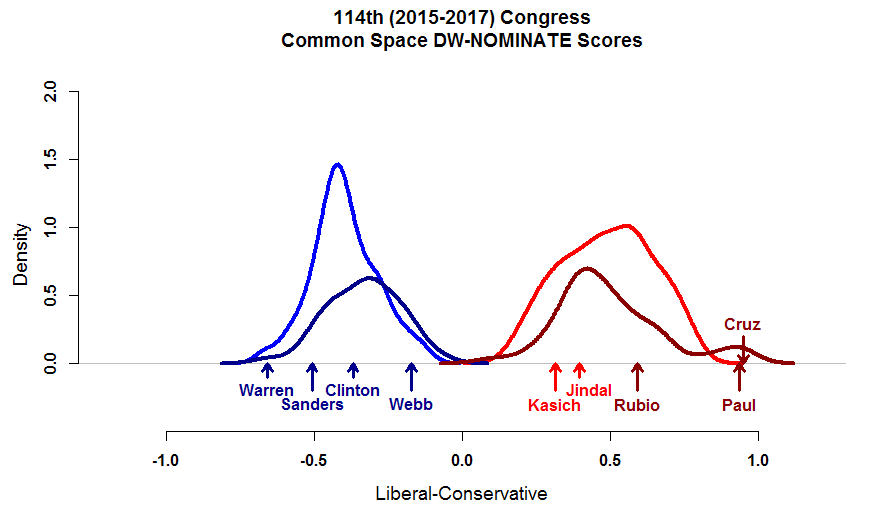
Charlie Cook has a set of very interesting analyses of loyalty to leadership among Democrats and Republicans. While Democrats who live in safe districts are more likely to vote with Pelosi than Democrats from marginal districts, the opposite is true among Republicans. Marginal district Republicans are much more likely to vote with Boehner than Republicans from safe districts.

This pattern is likely explained by primaries and the unusual disjuncture between the hardcore Republican base and the House leadership. Members from safe districts in both parties have a huge incentive to pay more attention to their primary rather than general election electorate. While moderation is rewarded in the general election, it’s all about the base in a party primary.

As a result, Democrats from safe districts have no problem casting solid left votes. Notice that the major Democratic defection from President Obama was on trade, where he lost Pelosi’s support and was at odds with the Democratic union and left-wing base.

The Republican conservative base is hostile to efforts by Boehner and McConnell to concede ideological points in order to govern. Ted Cruz’s attack on Mitch McConnell was an applause line at last night’s debate! So Republicans from safe districts are more likely to rebel against their party’s leadership. In contrast, marginal district Republicans want their party to look reasonable and able to make the government function so they vote with Boehner.

Share

Republican Debate Wrap Up

So I am currently in an undisclosed location with no television, which still did not leave me safe from political debates. Nevertheless, thanks to the inability of the FOX news stream to work, I had to listen to it on the radio feed while watching a picture about 10 seconds off from the talk on the home page.

Right Wing and Angry

I was struck once again how right wing the Republican Party has become. Jeb Bush, probably the most conservative governor of his (now past?) day, was one of the “moderates.” Projecting strength was the order of the day with Paul’s efforts to hearken back to a day when conservatives believed doing less was more falling flat.

Angry too. President Barack Obama isn’t just wrong. He’s a traitor who has perpetrated countless unconstitutional acts, weakened our military, and ruined America. Not many rays of sunny optimism save for the Horatio Alger competition at the end of the debate that would not have been out of place in a Democratic debate.

Good Questions, Some Bias

The three questioners from the right-wing media establishment asked good, tough questions. Their major negative moment was Chris Wallace’s decision to turn “illegals” into a noun, which I guess was shorter than “those brown people.”

The Republicans may be having a bromance with Trump but FOX wants to break them up. The three moderators were gunning for the Donald who repeatedly received questions that one would call “gotcha questions” except they were totally legit.

On the other hand, Marco Rubio received the easy softball about what he’d do to improve small business. Gave him the opportunity to hit the usual Republican erogenous zones. FOX man crush?

El Trumpo

Contempt. This guy has it for everyone. One even had the sense that he had it for the people who let him on the stage. A one man walking self-admiration society. With Trump, the answers may devolve into word salad but it’s all about the attitude.

Bush Part III

Felt like he was serving reheated pablum from the previous Bush administrations only that he’s too bright to believe it, which tended to weaken the delivery. You never quite feel you know where he stands–a problem in an election where “authenticity” (even if from a fake reality TV star!) seems the order of the day. He tried to dog whistle the right at the end with a Terri Schiavo allusion but it didn’t seem like a night for subtlety.

Though he nonetheless came across as one of the adults in the room, Bush’s unavoidable ability to remind us of his brother and complete hogwash of an answer on how he would create 4% economic growth through magical thinking made him look less like a general election winner than before the debate.

Marco Rubio

Has somehow managed to make Republicans forget that he was one of the major sponsors of the much reviled immigration reform bill. Rubio had the most telegenic delivery in the debate. His youth combined with not being Bush made him seem a more likely candidate if the goal is to get the Republicans to nominate someone credible who can get voters to turn the page.

If he does become the nominee, expect Democrats to play the clip unceasingly on his opposition to banning abortion in cases of rape and incest in response to a question from Megyn Kelly. Many Americans are uncomfortable with abortion but this provides a clear distinction that any Democrat would be glad to draw.

Ted Cruz and Rand Paul

Fascinating to see how the Republicans are no longer just that into the two guys who enchanted so much after the 2014 elections. Paul was an object lesson on what not to say to appeal to Republican voters.

Cruz continues to try to win the game of who is the most conservative of them all. But somehow pressing that button isn’t working for him anymore–at least not yet. Completely uncompromising and a good example of how our dysfunctional government could become more so.

And the Rest. . .

Huckabee is extremely comfortable on television. Sorta like an infomercial that leaves me deeply uneasy. Republican commentators thought he did well and he certainly wasn’t gunning for my vote.

Ben Carson’s soft-spoken delivery left me utterly confused as to why he is a Republican phenom. Unless his job is to explain why it’s OK never to talk about race–his big applause line.

Chris Christie’s ongoing problem is that he is the Lucy Ricardo of the Republican candidates–he always has some ‘splainin to do and never sounds altogether convincing doing it. Couldn’t answer why his state’s bond rating has plummeted even though he’s done such a bang up job balancing the books. Loves the blame game–it’s always someone else’s fault. Doesn’t look like Gov. Hogan’s endorsement will pay off for Maryland in future.

John Kasich sounded like a reasonable guy with experience. This leads me to believe he is unelectable in a Republican primary, despite the clear affection from the hometown crowd. But it’s hard to imagine how any nominee would not give serious thought to putting this popular swing-state governor on the ticket.

Scott Walker made no memorable impression on me. No gaffes and nothing off from the Republican script.

Final Note

As @PeterBeinart tweeted, “how on earth does Saturday Night Live parody this?”

Share

Five Myths About MoCo’s Department of Liquor Control

Today, I am pleased to present a guest blog by Adam Pagnucco.

Few issues in county government have received more attention over the past two years than the operations of its Department of Liquor Control (DLC). In most parts of the United States, the alcohol industry has been divided into three tiers since the end of Prohibition: producers, distributors and retailers. DLC, which is a county department but derives its authority from state law, inserts itself into this structure as an extra middle-man between distributors and retailers. Instead of being able to sell directly to Montgomery County-based retailers, distributors must sell their products to DLC which in turn sells them to stores and restaurants. DLC then charges an extra mark-up which, after paying for its cost of operations, is returned to the county’s general fund as revenue. DLC also has a complete wholesale and retail monopoly on hard alcohol and sells it through county stores.

A sure way to increase costs, delays and inefficiencies in any distribution system is to add more middle-men, especially ones who do not add value to compensate for their fees. DLC is no exception and has been the subject of complaints for years. But mounting problems, growing press interest and the emergence of the agency as a political issue in last year’s election have brought DLC to the forefront of public attention.

It’s time for a hard look at the myth and reality of DLC.

Myth 1. The county needs DLC’s net income to function.

In Fiscal Year 2016, DLC is expected to transfer $24.5 million in net income to the county’s general fund. That amount represents 0.48% of the county’s total $5.1 billion in projected revenues.

The county regularly adapts to revenue shortfalls of much larger amounts. Its six-year fiscal plans contain revenue estimates that vary up and down by tens of millions of dollars before actual revenues are recorded. The council just approved a $54 million reduction in its recently passed operating budget. The Silver Spring Transit Center is $50 million over budget (and counting). Between Fiscal Years 2013 and 2015, the council reduced energy tax revenues by a cumulative $31 million per year. And in 2010, the council approved a $191 million reduction from the prior year’s tax-supported budget. None of these adjustments were painless, but the county got through them and the world did not end.

The county government can survive without DLC’s money. It simply chooses to collect it because it can.

Myth 2. DLC’s monopoly is needed for public safety.

Last year, Council Member Craig Rice claimed that “county control of liquor sales promotes safety, particularly when it comes to sales to those who are under age 21.” The DLC does indeed vigorously regulate alcohol licensees. It has an eleven-person Licensure, Regulation, and Education program that conducts 400 minor consumption compliance checks annually and trained more than 1,300 licensees in safe alcohol service last year. Additionally, the county’s Board of License Commissioners issues liquor licenses and can revoke and suspend them for violators. But these functions are separate from the county’s role as an alcohol merchant and do not depend on a sales monopoly to be effective. In fact, there is no evidence that the county’s monopoly itself contributes one way or the other to regulatory efficacy. In Washington State, which gave up its alcohol sales monopoly in 2012, both DUI arrests and drunk driving collisions actually FELL a year later.

Myth 3. Without DLC, high paying union jobs will be lost.

This claim is frequently made by MCGEO (Municipal and County Government Employees Organization), the union which represents more than 300 DLC employees along with many other rank-and-file workers in county government. The union has a responsibility to protect its members and generally does an excellent job of it, so its position is understandable. But if DLC’s operations are eventually eclipsed by the private sector, there is no guarantee that union employment will suffer a net loss. That is because many private wholesalers are organized by the International Brotherhood of Teamsters, another union noted for its aggressive defense of its members. MCGEO may prefer that wholesale alcohol employees pay dues to its treasury rather than the coffers of the Teamsters, but that is not a public policy concern that warrants large-scale extractions from county residents.

Myth 4. DLC is getting better.

George Griffin, the long-time Director of DLC, is a happy warrior and tireless defender of his agency. In 2005, Griffin was elected President of the National Alcohol Beverage Control Association (NABCA), a group of public alcohol organizations. He told NABCA of his efforts to continually improve DLC’s operations, including its new Enterprise Resource Planning program to increase efficiency and its installation of security cameras in warehouses. Griffin said, “POS (point of sale), inventory control, accounting, the warehouse, licensee ordering, buyers: they’ll all be tied together… from the retail stores, which will have running inventories, to our drivers, who will be equipped with handhelds.”

Years later, subsequent investigations revealed DLC to be anything but a model of efficiency. This past February, the county’s Inspector General found that DLC employees used “informal, handwritten notes” to track inventory, resulting in “significant decreases in the recorded quantities of warehouse inventories in FY2013 and FY2014.” NBC4 discovered DLC employees drinking and driving on the job and skimming cases of beer to sell on the black market. Restaurant owners have gone on the record with searing complaints about DLC’s service, with one even calling the agency an “evil empire.” Even Gino Renne, leader of the union that represents DLC’s employees and one of its biggest defenders, concedes, “This department needs to be more nimble.”

Myth 5. The County Council has called for “historic reform” at DLC.

On July 28, the County Council passed a resolution calling for a procedural change concerning some of DLC’s sales. The resolution is not binding but may be the basis for a future state-level bill, which is required to affect DLC. County Council Member Hans Riemer called the resolution “historic” in a mass email. But is it really?

The resolution addresses “special orders,” or products that are requested by DLC customers that are not part of its regular stock. These products are often specialty wines or craft beers that have not yet developed wide distribution in the county. Restauranteurs have complained for many years that DLC special orders are subject to long delays, big markups and substantial shortages, particularly when compared to the service offered by private wholesalers. The council’s resolution would allow customers to bypass DLC and deal directly with the private sector when requesting these items.

That sounds great except when considering the actual details of the resolution itself. Among other things, the resolution authorizes the county to establish a fee to “replace DLC estimated revenue lost by allowing the sale of special order beer and wines by private wholesalers.” That’s right, DLC would earn money on alcohol it does not even deliver. Multiple distributors testified at the council’s hearing on this resolution that the size of the fee, along with the additional cost of direct delivery to customers, might deter them from participating in this program. In other words, there would be no effective change.

DLC’s fee for doing nothing is reminiscent of Pepco’s “bill stabilization adjustment,” under which the utility was allowed to charge customers for power it did not deliver during outages. Many people condemned Pepco’s ability to charge for a service it did not provide. But Pepco is not part of county government. Perhaps that explains why what is unacceptable for Pepco is apparently acceptable for DLC.

The biggest myth of all is that DLC can be reformed from within by a series of small tweaks like this one. The idea resembles former Soviet Union leader Mikhail Gorbachev’s concept of “perestroika,” under which his communist government was expected to reform itself. The Soviet Union ultimately collapsed. But with its powerful protectors, DLC goes ever on.

Share

Bickerman Misleads Constituents on the Law

Town of Chevy Chase Vice Mayor John Bickerman is a lawyer and BickermanJunemediator who is often quick to tout his legal talents, which makes it all the more surprising that he has failed to apologize for misleading his constituents on a key legal point related to his involvement in election shenanigans.

Specifically, as part of his defense for his support for a secret write-in campaign about which only the “right people” were informed as to who was running as a write-in candidate, Bickerman asserted in an email to the Town that it is a “Constitutional right” to be a write-in candidate. Wrote Bickerman:

A person’s right to be an a write-in candidate, and the corresponding right to seek others to vote for a write-in candidate is a Constitutional right that has been clearly acknowledged by the federal court of appeals for Maryland.

However, as Town Resident Ben Delancy has explained, Bickerman’s characterization of the law concerning write-in campaigns is simply wrong:

Mr. Bickerman and others on this board have frequently referred to a Fourth Circuit opinion confirming a constitutional right to have write-in candidates and campaigns. He suggests that any attempt to limit the ability to write-in would violate those constitutional rights. He finally implies that we would obviously understand all of this if we had bothered to consult with an election lawyer.

He is wrong.

There is no Fourth Circuit opinion holding that there is an absolute constitutional right to have write-in campaigns. There is a Fourth Circuit opinion, Dixon v. Md. State Administrative Election Laws, 878 F. 2d 776 (4th Cir. 1989), finding that it was unconstitutional for Maryland to impose restrictions on one group of write-in candidates (those who fail to pay a fee), but not to impose those same restrictions on other write-in candidates. The court did not hold that there is an absolute right to have write-in candidates because it was not asked to address that issue. In fairness to Mr. Bickerman, however, I acknowledge that the Fourth Circuit did refer to the ability to vote for a write-in candidate as a fundamental right, and that Dixon is sometimes cited for that proposition.

Nevertheless, it is perfectly clear that there is no such absolute constitutional right. The United States Supreme Court, in Burdick v. Takushi, 504 US 428 (1992), upheld a state’s complete ban on write-in candidates. If there was ever any debate about the impact of Dixon, that debate was ended by Burdick.

Given our Town’s election rules, which place very few limitations on someone’s ability to be a candidate, it is entirely likely that a complete ban on write-in candidates would be permissible and should be among the options considered.

Mr. Bickerman complains below that we are confusing the community, but I think it is perfectly clear who is causing confusion.

So either Bickerman–a lawyer himself–is misinformed on the prevailing Supreme Court law concerning write-in campaigns, or he intentionally misled people in Chevy Chase. Either way, he has yet to correct his mischaracterization of the law.

Bickerman also continues to refuse to answer questions posed by the Town Elections Board and Ethics Committee regarding his actions during the election. But his refusal to answer questions itself speaks volumes. Where an elected public official is unwilling to offer any plain account of his own involvement in a decidedly unethical campaign, his constituents will not have any trouble drawing their own conclusions.

Share

Civil War Skirmish in Rockville

Rockville Mayor Bridget Newton has no opinion on whether the statue of a Confederate cavalry private outside the courthouse in Rockville should be removed. “It’s a County decision. It’s not my choice,” Mayor Newton explained, when I asked her for personal views on the subject.

The statue, which has a memorial plaque stating “To Our Heroes of Montgomery Co., Maryland, That We Through Life May Not Forget To Love The Thin Gray Line” has been the subject of controversy lately in Rockville’s City government. On July 20, the City held a 3.5 hour public meeting on the topic.

Mayor Newton has gone to great lengths to make sure that her non-opinion is the official opinion of the City of Rockville. Here is what appears to have happened: Though the Council had planned to take up the issue publicly at its next meeting, Mayor Newton communicated to the Council that County Executive Leggett wanted a letter from the City more quickly.

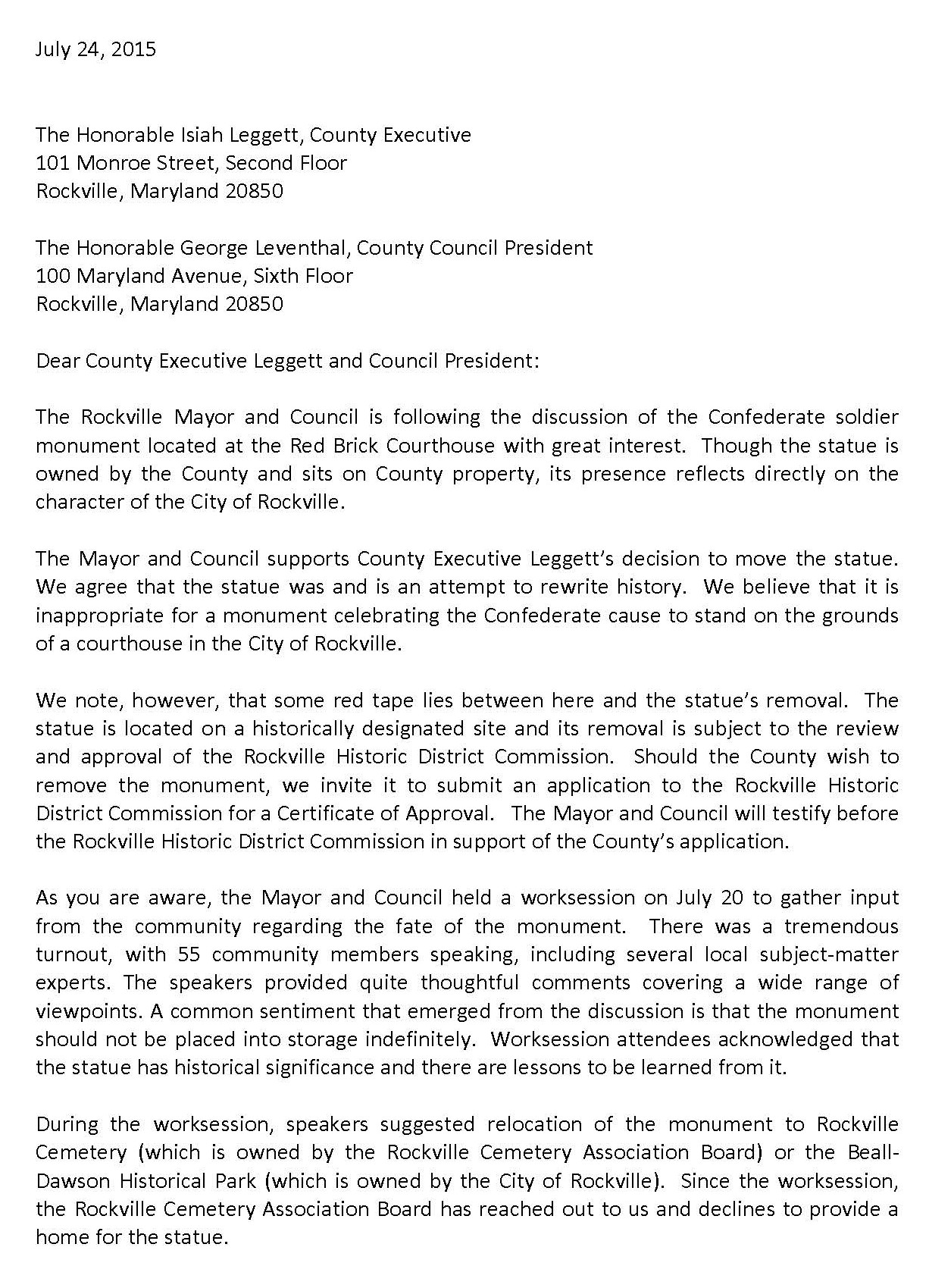
Remove the Statue

City Councilmember Tom Moore’s draft of a proposed letter in support of removal of the statue from the courthouse gained approval from two of his colleagues–Councilmembers Virginia Onley and Julie Palakovich Carr. Here is the letter: Moore Letter_Page_1Moore Letter_Page_2Councilmember Beryl Feinberg wrote her colleagues that she couldn’t support it as written. The Mayor did not weigh in on Moore’s draft. However, as she has just one vote among five under Rockville’s system of government, Moore’s letter still had a majority.

How “Remove the Statue” Became No Opinion

At that point, Mayor Newton had two options in my view. She could  sign the letter and send it on to the County. Alternatively, she could present a counter proposal and see if she could gain support for it from a Council majority.

Newton chose the second approach but appears to have gone about it an unusual, problematic way. The Mayor got two of her colleagues–Feinberg and Onley–to approve a very different letter that says nothing most eloquently on the key subject of whether the statue should be removed.

But she appears to have left Moore and Palakovich Carr completely out of the loop on this significant rewrite–a major violation of conventional Council order. While colleagues often consult each other separately, all are normally invited to weigh in on a final decision, especially when an alternative approach has already gained majority support.

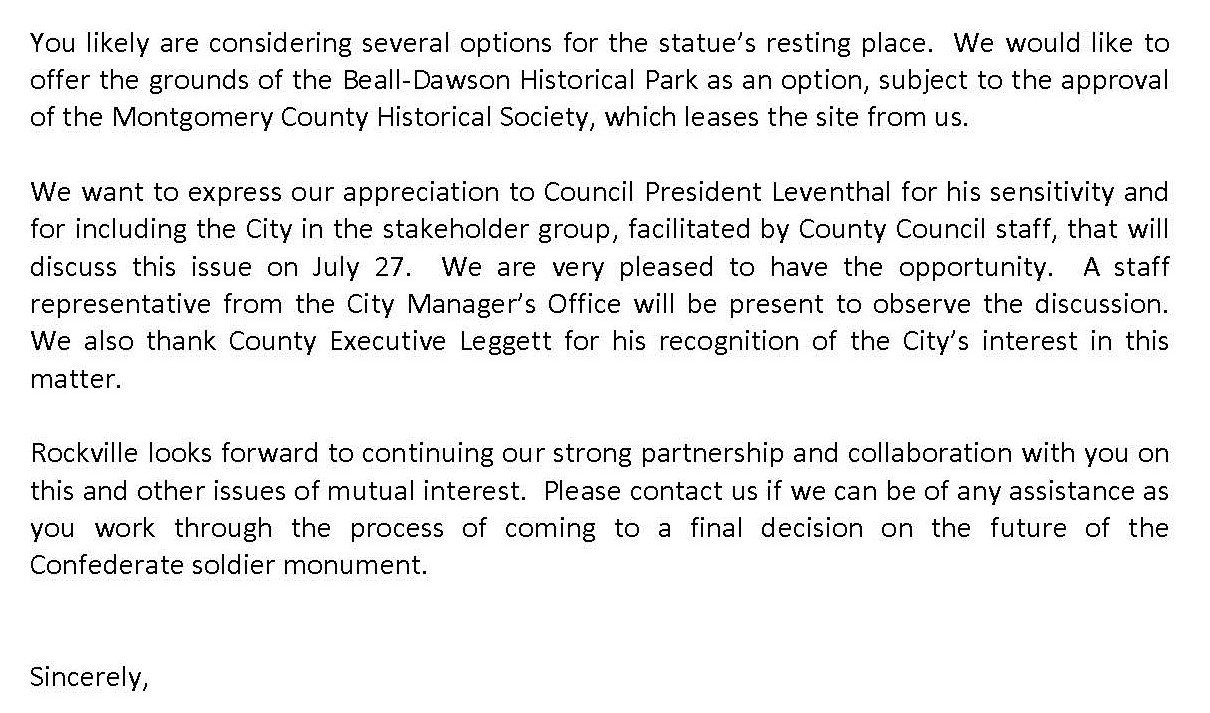
Here is the letter Mayor Newton sent:

Letter to County Executive for Confederate Statue_Page_3 Letter to County Executive for Confederate Statue_Page_4Newton did not notify Moore and Palakovich Carr until she had secured approval for the new letter privately and sent it to the County. Here is the email she sent:

Hi – attached please find the letters to County Executive Leggett and Council President Leventhal.

As you know – I was asked by Mr. Leggett to send a letter regarding the Worksession and the need for the County to follow Rockville’s HDC process.  As I have also mentioned – we have received several calls (5) from the CE’s office asking where the letter was.   Mr. Leggett was appearing live at 12:30 today and wanted to have the letter by then.  Unfortunately – we didn’t meet the deadline.

This has been an arduous process and unfortunately there have been many iterations of this letter.   My thanks to Councilmembers Onley and Feinberg for their time today in working with me to create an authentic recap of Monday’s Worksession.  This letter has been approved by a majority of the Council.

You will remember that we did not have a discussion among the Body regarding any of the options proposed by the SME’s –  or the public  – and therefore it is not possible for us to opine on the position of the Council or our  recommendations.  We have removed any statements from the letter that do not accurately reflect what happened Monday evening. . . .

I know this letter will not be pleasing to all members –  and while I regret that – what I don’t regret is that it is an factual reporting of a very significant meeting. The Worksession was a highpoint for the City – I’ve had positive comments and reactions from many different sources.  I sincerely hope that we can move past this point and get back to the business of working together to govern our City.

Not the Way to Do Business

When I spoke with Mayor Newton yesterday, she explained that she thought that the changes were necessary:

There were changes that needed to be made to be consistent with the Council worksession held on Monday, July 20th. It was important the letter reflect what happened at the worksession. There were no votes taken at the worksession. It would’ve been improper to indicate that decisions had been made.

That’s a nice explanation and sounds reasonable. But it doesn’t explain why two colleagues seem to have been left entirely out of the loop while the Mayor was shopping her very different letter. Clearly, Mayor Newton does not want to take a position and worked very hard to make sure that the City took a similar approach, even to the extent of keeping colleagues in the dark.

Moreover, though the Mayor avers that it was inappropriate for the City to opine on the subject, expressing no opinion does not mean that no decision was reached. Indeed, this approach can be an oblique way of making a decision and rendering an opinion, as it appears to have been in this case.

Especially as the Mayor’s letter takes positions on several topics, which undercuts her contention that it was inappropriate for the City to express an opinion in the absence of a public vote. For example, the letter states that the statue “should be moved once” if it is moved, and declared that it is of “historical significance” and there are “lessons to be learned from it.”

The claims made regarding the importance of public consultation are further belied by the Mayor’s seeming decision not to consult with two councilmembers and notify them only after the letter was sent. Not a model of open decision making.

Finally, the Mayor’s contention to me that it is inappropriate for the City to express an opinion because it’s the County’s decision makes little sense since (1) the County Executive solicited their opinion repeatedly, (2) the letter thanks the Council President for seeking their input, and (3) the Mayor encouraged the Council to respond to the request.

No doubt Rockville’s next Council meeting will be interesting.


Share

The Trump and Other Meaningless Polling Moments

Poll: Trump surges to lead in big lead in GOP presidential race” is currently the lead headline trumpeted on the Washington Post website. While I am as big a poll junkie as the next person who follows politics like baseball, this seems a good opportunity to remember how meaningless presidential primary polls are at this point.

Money is Being Raised, Not Spent
While candidates are busy dialing for dollars, they aren’t spending their hoards of cash on media yet. When they do, it will play a major role in defining candidates and today’s leader easily becomes the next one on the garbage heap.

Mitt Romney became the Republican nominee in 2012 by going negative on each new anti-Romney in turn. As the following chart shows, Rick Perry, Newt Gingrich, Herman Cain, and Rick Santorum each had their 15 minutes during the last go round.

2012-GOP-CHART-570

Election expenditures by Super PACs and others will also shape public opinion. Nearly $3.4 million dollars was spent by “outside groups,” including Super PACs supporting a candidate, attacking Gingrich in Iowa after he took a polling lead. After Gingrich resurfaced in South Carolina–groups favoring him spent $3.0 million there attacking Romney–other groups spent another $9.9 million pulverizing Gingrich into oblivion in Florida.

Media Moment
Most candidates are completely unknown to the American people, including the much smaller primary selectorate. Nothing gets media attention like making outrageous statements. Long before Donald Trump, we had Pat Buchanan closing speeches by calling people to “lock and load” for the conservanut revolution.

Inevitably, going up in the polls is followed by media scrutiny, which leads to either media gaffe or discovery of past embarrassment sure to be featured on all the news and comedy programs. Remember that Herman Cain’s ephemerally popular 9-9-9 plan was followed by “U-beki-beki-beki-beki-stan-stan.” Rick Perry couldn’t recall the Cabinet departments he planned to cut but now has new Google glasses designed to help him out this year.

In short, after the media has raised one up by giving red-meat remarks attention and the ripped them to shreds, the public and the cameras move on to the next one.

Ask a Stupid Question, Get a Stupid Answer
Asking people who they plan to support for president this far out from the event makes no sense. They haven’t focused on the election. Excepting Hillary Clinton, they don’t know much about any of the candidates.

When prompted by a question, people usually try to give answer. Doesn’t mean that their response on who they support is a fixed or remotely firm opinion. So just regard polls like the one in today’s Post as something designed to entertain us during the summer, sorta like Donald Trump’s hair, but not to be taken seriously in fall.

Share

Purple Line Moving Forward

Surprising many, Gov. Larry Hogan announced that he plans to move forward with the Purple Line. Before analyzing this decision, I want to congratulate my many friends who have supported the project on this major step forward. While it’s not a done deal, my assumption at this point is that it will get built.

Politically Astute
Gov. Hogan has set this up nicely to flummox his opponents. He will tell his supporters that he has substantially reduced the cost and made heavily Democratic Montgomery and Prince George’s pay more for it. If they cannot come up with the money, he can shift the blame for Purple Line failure on to them.

Cost Down Less and Borrowing Up More Than Advertised
The Governor has adopted the Orwellian speak surrounding the project of referring to the money that the concessionaire (i.e. the project builders) will spend as the “private sector contribution.” Of course, it’s not a contribution but money that the State will be paying back with interest for many, many years.

A sizable chunk of the cost reductions touted by the Governor are not really reductions but additional money being put on the Giant Purple Credit Card. It’s analogous to claiming that you saved money on buying your house because you took out a bigger mortgage.

Prince George’s County Negotiates
While Montgomery seems happy to pony up another $50 million for the Purple Line, Prince George’s has been much more hesitant. But Prince George’s response looks less like a flat no than the savvy opening gambit in a negotiation.

In their eagerness for the project, Montgomery officials may have left the County in an exposed position in which we’ll end up paying a lot more than our neighbors. Is Montgomery willing to raise its contribution further? If so, how much? If others stand firm, will Prince George’s pay?

Montgomery County Pays–But How?
How does Montgomery plan to find the extra $50 million? County Executive Leggett and Councilmember Floreen said that we could issue bonds but bonds have to be paid back. As County borrowing capacity is limited, at least if it wants to maintain its credit rating, this will reduce our ability to borrow for other purposes.

As a result, Montgomery will have to cut spending in other areas. What will the cuts be? Will the County maintain its commitment to build the bike path next to the Purple Line? Alternatively, will the County try to raise taxes even though income taxes are at the legal max and raising the property tax above the Charter limit would require a unanimous Council vote?

The County could create a special taxing district on new development in the Purple Line area. It will be interesting to see if the Chevy Chase Land Company is willing to start paying substantial sums towards this project which will benefit it immensely. Or will it continue to shift costs on to the rest of us.

Who Pay for Cost Increases?
If costs rise after the contract is awarded to the concessionaire–either due to changes requested by the State or provisions within the contract with price flexibility (e.g. related to energy prices)–who will pay for the inevitable cost increases? Will it fall on the State or on Montgomery and Prince George’s County?

These are tough questions, which is why many smart proponents of the project have been more cautiously celebratory than might be expected and carefully sorting through the Governor’s new proposal. And now that the project is moving forward, County officials will have to begin really answering them.

Share

Maryland Politics Watch